
Understanding Gymnastics Scores
Scoring in gymnastics is a vital component of the sport, providing a clear and structured way to measure performance. At the elite level, each score is decided by a panel of four to nine judges, with specific roles to evaluate difficulty and execution. It evaluates two equally important aspects: the difficulty of the skills performed and the execution of those skills. This balance ensures that gymnasts are recognized not only for pushing the limits with challenging routines, but also for delivering them with precision, control, and artistry. By combining both elements, the scoring system rewards complete performances—where technical mastery meets elegance—and ensures fairness across all competitors.

The Two Pillars of Gymnastics Scoring
Scoring in gymnastics blends science, skill, and artistry. Every routine is judged on two equally important parts: the difficulty of the skills performed and the quality of their execution. Together, they create a complete picture of a gymnast’s performance.

D-Score:
Measuring Difficulty
The D-score reflects the technical content of a routine—what skills are performed and how they are connected. Each skill has a set value, and bonuses are awarded for complex combinations. There is no upper limit, so the more challenging the routine, the higher the potential score.
E-Score:
Judging Execution
The E-score starts from 10.0 and measures how cleanly the routine is performed. Judges deduct points for errors in form, balance, artistry, and landings. A flawless, elegant performance can outshine a more difficult one with mistakes.
The Hidden Playbook Behind Every Gymnastics Score
Behind every score is a detailed, constantly evolving rulebook known as the Code de Pointage, or Code of Points. Published by the International Gymnastics Federation (FIG), it assigns a value to every skill, sets the requirements for each event, and outlines exactly how deductions are applied. Updated every four years after the Olympics, this “hidden playbook” shapes how gymnasts build their routines and how judges evaluate them. For athletes, it’s the ultimate guide to designing a routine that scores high. For judges, it’s the standard that ensures fairness and consistency in competitions around the world.
Code de Pointage FAQ: Understanding
Official Scoring Rulebook
Everything you need to know about the Code de Pointage—who writes it, how it changes, why skills have names, and how this essential guide shapes every gymnastics score.
The Code de Pointage—often called the Code of Points—is gymnastics’ official rulebook. Published by the International Gymnastics Federation (FIG), it gives a points value to every skill, sets the required elements for each apparatus, and details exactly how deductions must be applied. It’s the ultimate reference for judges and the playbook that shapes every gymnast’s routine. https://www.gymnastics.sport/site/rules/rules_files/cop/WAG_CoP_2022-2024_amended_2023.pdf
The sport never stands still. Athletes create new skills, techniques improve, and the FIG updates safety guidelines. The four-year cycle—aligned with the Olympic Games—ensures the Code reflects the current state of gymnastics and rewards both innovation and artistry.
The women’s artistic gymnastics Code is typically over 200 pages long. It contains detailed descriptions, symbols, and diagrams for every skill, plus full explanations of judging criteria, composition requirements, and penalty rules.
These are penalties that aren’t about performance quality, such as going out of bounds on floor, starting late, or incorrect attire.
The Technical Committee is a group within the International Gymnastics Federation (FIG) responsible for creating, updating, and interpreting the Code de Pointage. There is a separate committee for Women’s Artistic Gymnastics and Men’s Artistic Gymnastics. Members are experienced international judges, coaches, and former elite gymnasts elected by FIG member federations. They decide skill values, define deductions, and ensure the rules are applied consistently worldwide. https://www.gymnastics.sport/publicdir/rules/files/en_1.1%20-%20Technical%20Regulations%202024.pdf
Yes. The Code governs FIG competitions and high-level national meets. Lower levels and youth programs often use modified versions or simplified rules so scoring is easier to apply and understand.
They can’t rewrite it, but they can submit new skills for evaluation. If approved at a major international competition, the skill is named after the gymnast and added to the Code with an assigned difficulty value.
It dictates what counts toward the difficulty score, what earns connection bonuses, and what’s required for full composition credit. Smart coaches design routines to hit all the Code’s targets while minimizing the risk of deductions.
The full document is available for free on the FIG website. While it’s technical and dense, it’s an invaluable resource for coaches, judges, and serious fans who want to understand exactly how scores are built.
In the Code de Pointage, every skill has both a technical description and, in many cases, a name—often honoring the gymnast who first performed it successfully at a major international competition. These eponymous skills, like the Biles or the Cheng, are a mark of innovation and legacy. The naming system not only celebrates athletes’ achievements but also helps judges and coaches quickly identify elements without reciting long technical explanations.
The Code de Pointage is updated after each Olympic cycle to keep gymnastics evolving, fair, and safe. Changes reflect new trends, innovative skills, safety considerations, and feedback from coaches, judges, and athletes. This ensures the scoring system stays relevant and rewards the performances that define the sport today.
Let’s Build the Ultimate Gymnastics Knowledge Hub—Together
Every insight, detail, and shared story brings us closer to creating the world’s most complete resource for our sport. Together, we preserve its history, celebrate its beauty, and pass on its knowledge to the next generation.
How Do Judges Remember Every Skill You Perform?
Judges use a fast, specialized shorthand to track every moment of a routine. As you tumble, twist, and leap, they jot down symbols for each skill, mark connection bonuses, and note any deductions—all in real time. Years of training let them instantly recognize elements and replay the entire routine in their minds, turning those quick notes into an accurate score within seconds of your final landing.

Inside the Judge’s Table: How Gymnastics Scores Are Decided
Your complete gymnastics judging FAQ—covering panel roles, scoring rules, deductions, and the step-by-step process behind every score.
Judging involves human observation. While the rules are strict, slight differences in perception can lead to variations. The scoring system averages or reconciles these differences to ensure fairness.
If a required skill is missing, the routine loses its value for that element, and the gymnast may also face a composition deduction.
Artistry is part of the E-score but has its own criteria—musicality, rhythm, expression, and originality all factor in.
These are penalties that aren’t about performance quality, such as going out of bounds on floor, starting late, or incorrect attire.
Usually within 30–60 seconds, depending on how quickly notes are tallied and confirmed.
No, elite gymnastics has moved away from the perfect 10 scoring system. Since 2006, scores are open-ended, allowing gymnasts to earn points based on their routines' potential. For instance, Simone Biles has scored over 15.9 in competitions.
If there’s a clerical or input error, it can be corrected on the spot. For disputes, teams can file an official inquiry within a set time limit.
Yes. Judges are evaluated for accuracy, consistency, and adherence to the Code of Points. Poor performance can mean losing assignments.
Judges start by completing certification courses offered by their national gymnastics federation. These courses cover the Code of Points, scoring rules, and judging techniques. After passing written and practical exams, new judges begin with lower-level competitions and work their way up. To judge at elite international events, they must earn an FIG Brevet license, which requires advanced training, experience, and regular re-certification to keep skills sharp.
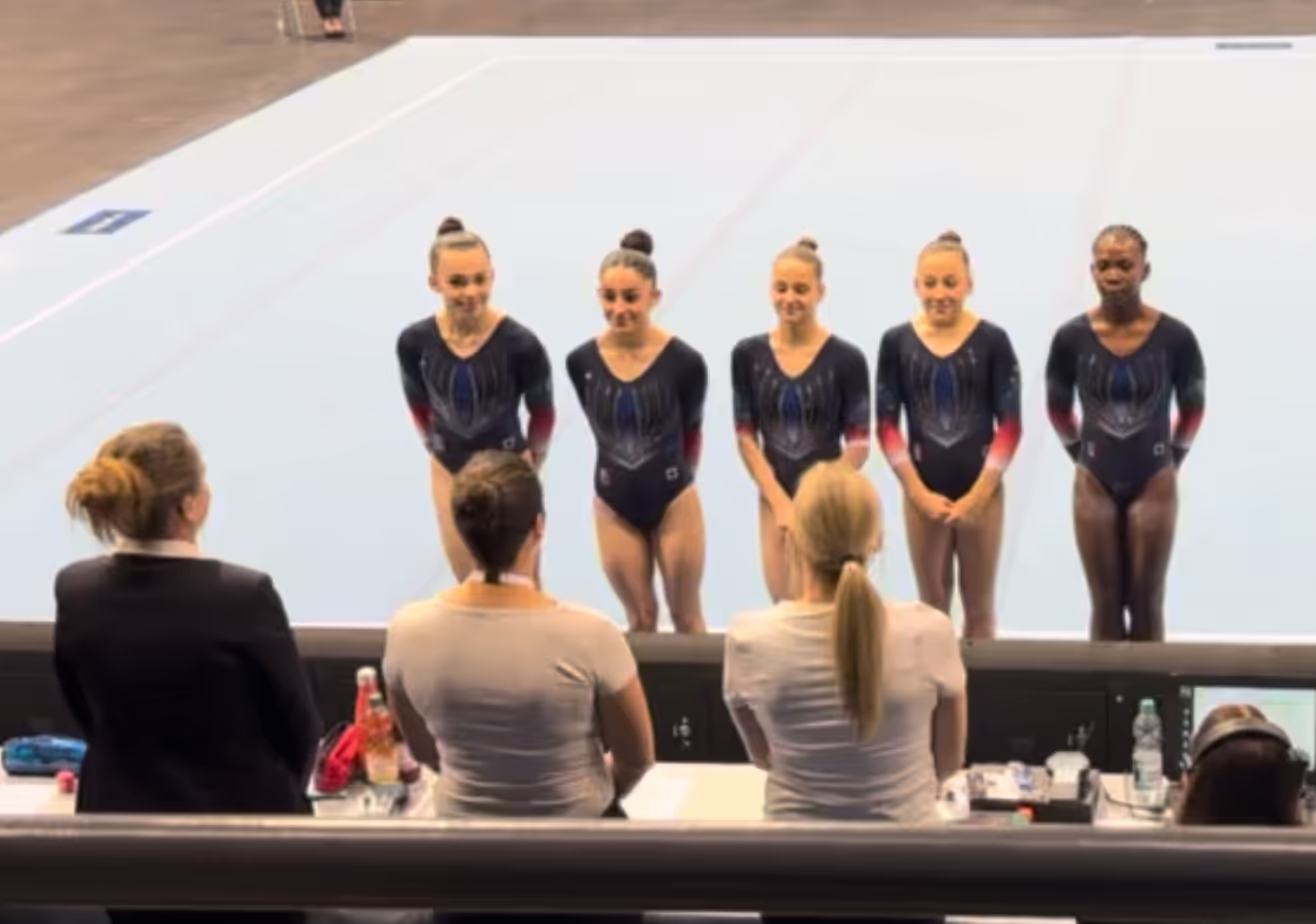
Yes, in the sense that they follow a strict, standardized dress code. Judges are expected to wear professional business attire—typically a dark suit or blazer with a light blouse or shirt, often accompanied by their federation badge or accreditation lanyard. This creates a consistent, neutral, and authoritative appearance across all judges, ensuring the focus stays on the athletes.
Help Us Make This Even Better
Together we can build the world’s most complete library for our beautiful sport. Every tip, correction, and shared experience makes our gymnastics community stronger and helps keep this knowledge alive for everyone.