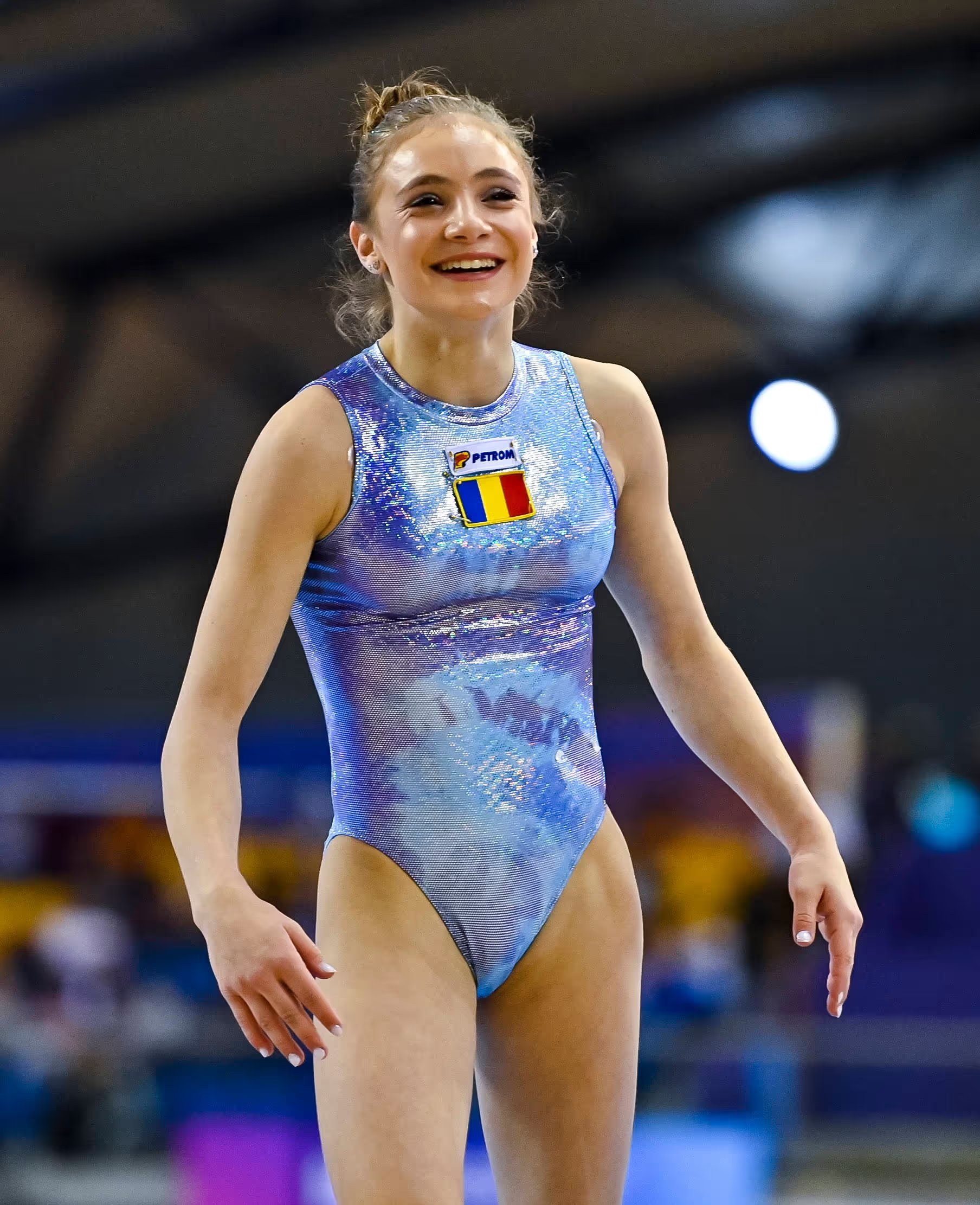
Confidence Begins with Feeling Safe in Her Body
She can't focus on homework. She melts down over small things. She compares herself to everyone online. Gymnastics doesn't fix these with pep talks - it fixes them through mastery. Physical control becomes emotional control. Real achievement becomes real confidence. And what starts in the gym becomes who she is everywhere else.
What You Get Back When She Starts Gymnastics
Real movement restores calm, confidence, and connection
When Nights Finally Become Peaceful
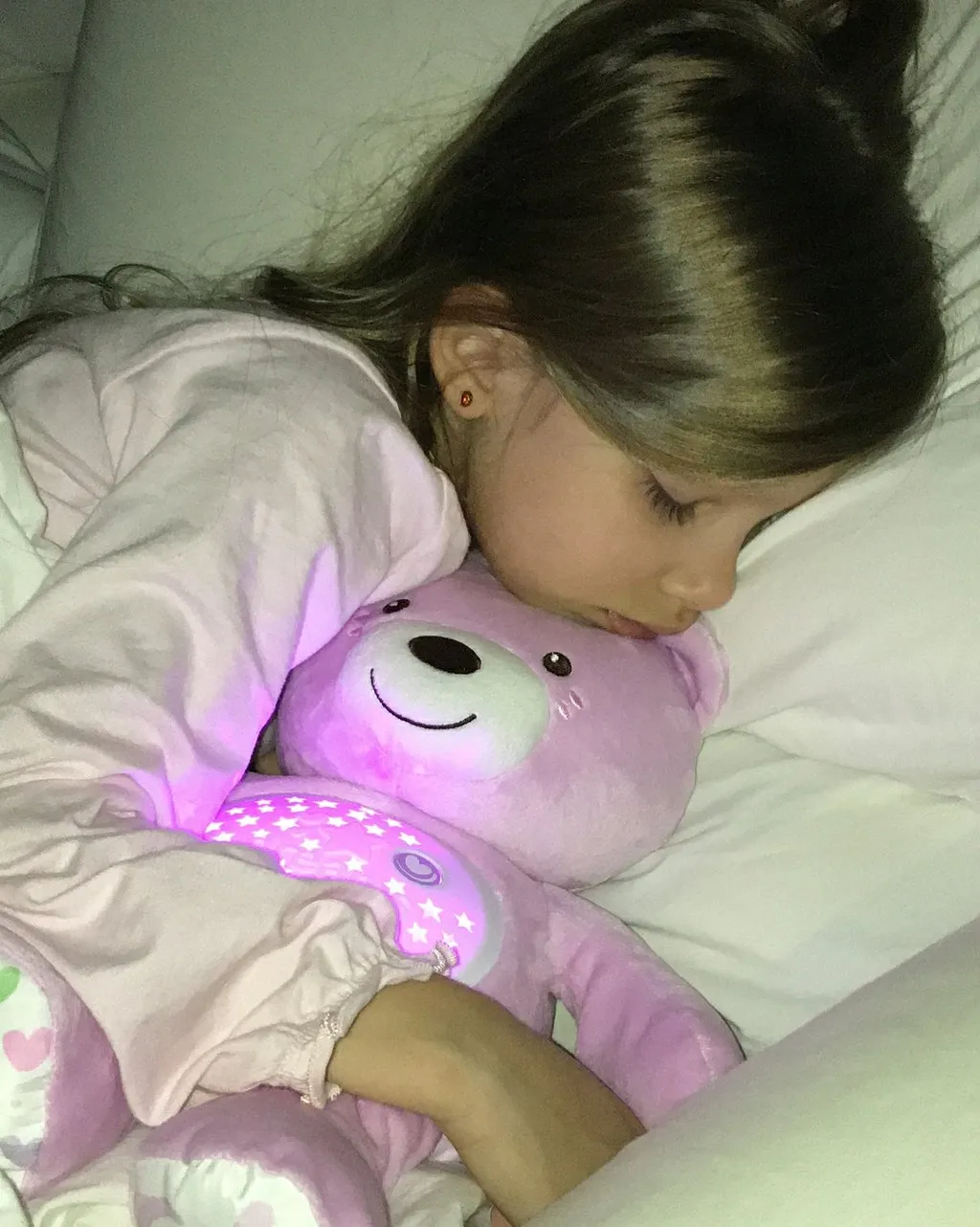
Bedtime battles, restless nights, late settling, and frequent wake-ups are among the most common struggles parents face. Gymnastics helps regulate your child’s natural sleep rhythm by releasing built-up energy in a structured, healthy way. The mix of physical exertion, coordination, and focus calms the nervous system, making it easier to fall asleep — and stay asleep. Parents often notice earlier bedtimes, fewer night wakings, and mornings that start calmer, happier, and more rested.

When Tantrums Fade — and Defiance Turns into Confidence
You know the look: crossed arms, defiant glare, the refusal to listen. Tantrums. Manipulation. Testing every boundary you set. Gymnastics doesn't fix this with timeouts or rewards. It fixes it through self-mastery. When she learns to control her body on the beam, she learns to control her emotions. When she pushes through frustration to nail a skill, she learns discipline beats defiance.Physical control becomes emotional control. And the girl who used to melt down over small things becomes the one who handles challenges with focus and determination.
When She Stops Comparing —
and Starts Becoming
Social media teaches girls to measure themselves against filtered, impossible standards. Gymnastics teaches something different: your body is powerful, not decorative. Every skill mastered — a cartwheel, a back walkover, a beam routine — builds confidence rooted in what she can do, not how she looks doing it. The mirror isn’t for judgment; it’s for form. Progress isn’t measured in likes, but in strength, balance, and control. Parents often notice daughters standing taller, speaking with more confidence, and defining themselves by capability rather than comparison.

How Gymnastics
Changes Daily Life
Real movement restores calm, confidence, and connection
When Screen Time Finally Loses Its Grip
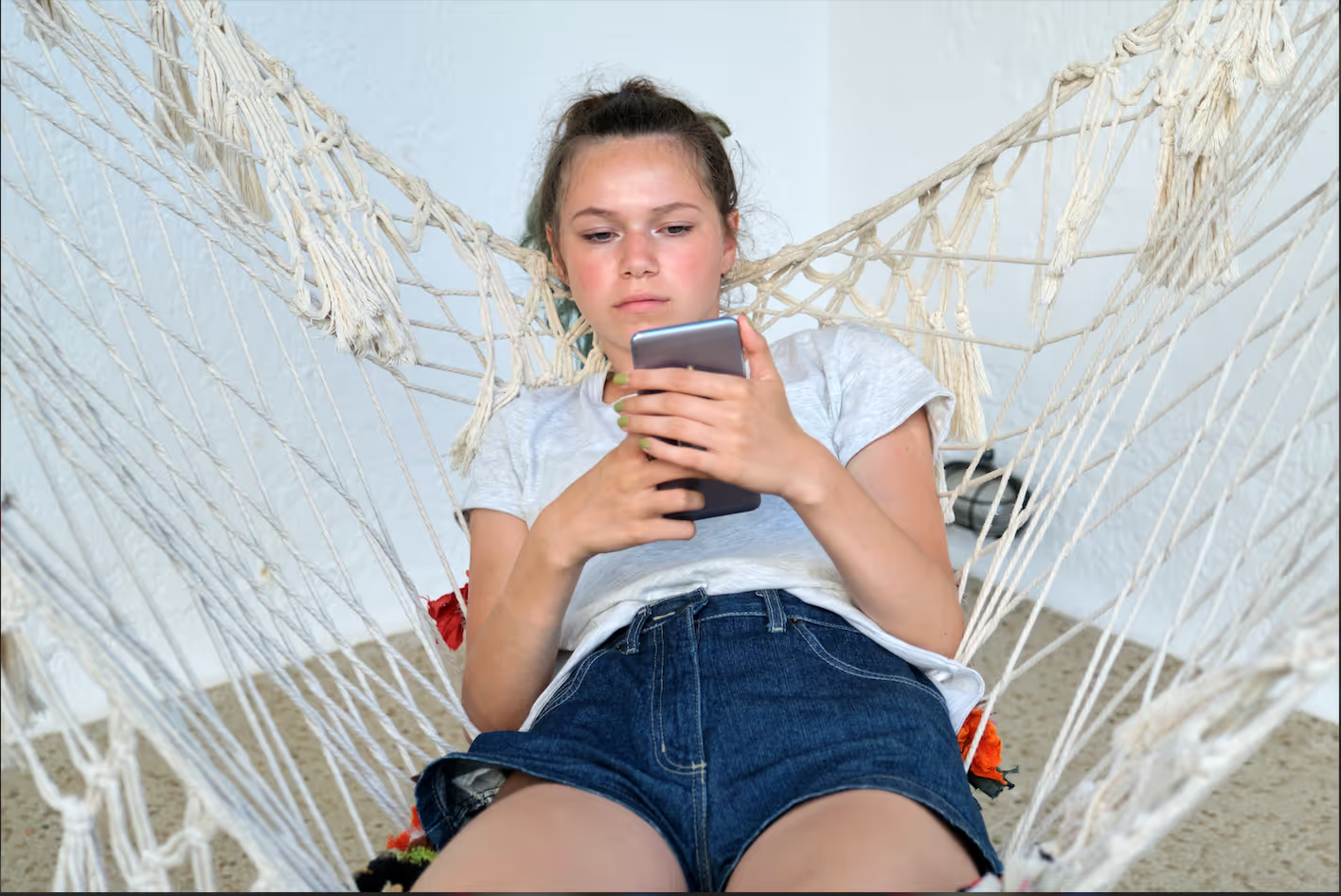
Screen-time battles are exhausting — the constant negotiating, the meltdowns when it ends, the quiet guilt when you hand over an ipad just to catch your breath. Gymnastics offers something different. An activity so engaging, so physically demanding, that screens naturally lose their pull. Movement, challenge, and visible progress create a kind of satisfaction passive scrolling can’t replicate. Parents often notice fewer pleas for devices, smoother transitions away from screens, and — most unexpectedly — daughters who would rather move, try, and flip than scroll.

The Best Defense Against Drugs and Addiction
Gymnastics builds a healthy identity, a strong community, and real mental resilience. Girls who belong in the gym don’t need to seek belonging in substances. They learn what their bodies can do — not what chemicals can make them feel.Discipline becomes self-respect. Training through challenge builds the strength to resist peer pressure. Gymnastics doesn’t promise immunity — but it gives her every advantage. She knows her worth. She knows where she belongs. And she’s prepared for life without escape.
Gymnastics Teaches Her to Get Back Up
Fall. Get up. Fall again. Get up again. Every gymnast knows this loop - it's not optional, it's the sport. Beam, bars, floor, vault: she fails over and over until she doesn't. And somewhere between the hundredth fall and the hundredth get-up, something changes. She stops being afraid of failing. That's what walks into the classroom with her. Into hard conversations. Into moments that used to make her quit. The girl who gets back on the beam without crying becomes the girl who doesn't crumble when life knocks her down.
What Confidence Looks Like at Every Age
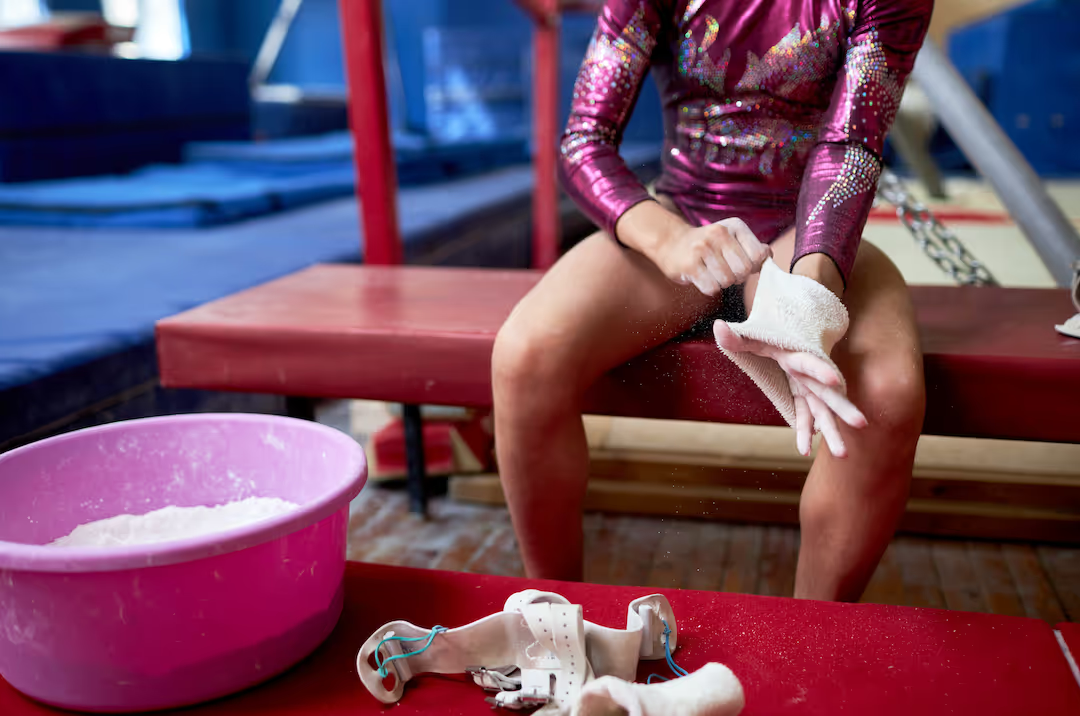
Movement builds confidence differently at every stage of childhood.The needs of a two-year-old aren’t the needs of a ten-year-old — but the foundation is always the same: feeling safe, capable, and at home in her own body. Explore how gymnastics supports girls at every age, in exactly the way they need most.
Parent–Tot (1.5–3 years) Confidence Begins With Trust
At this age, confidence means feeling safe to move. Rolling, climbing, balancing, and gentle exploration help your child understand her body and the world around her — always close to you. These early movement experiences reduce restlessness, support emotional regulation, and create a calm, secure foundation that carries into everyday life.
Kids (5–10 years) Confidence Comes From Mastery
This is the age where effort turns into achievement. Learning skills step by step teaches patience, resilience, and self-belief. Gymnastics helps children focus, follow structure, and push through challenges — building confidence rooted in real ability, not comparison. What she earns here stays with her in school and beyond.
Teens (9–13+) Confidence Becomes Identity
For older girls, gymnastics is more than movement — it’s self-definition. Training builds strength, discipline, and mental resilience at a time when confidence is often under pressure. Progress replaces comparison. Capability replaces doubt. Many girls discover not just what they can do — but who they are.They learn to show up consistently, even when motivation fades, and carry this earned confidence into school, friendships, and everyday life.
Competitive Gymnastics Confidence Through Commitment
At this stage, gymnastics is a conscious choice. Training is focused, competitions add challenge, and goals become personal. Competitive gymnastics builds discipline, responsibility, and resilience — teaching athletes how to prepare, perform, and grow under pressure while maintaining balance and joy. The confidence gained here supports both performance and everyday life beyond the gym.
Frequently Asked Questions
for Parents
Clear answers to common questions about gymnastics, development, and everyday challenges.
Yes. When taught by certified coaches, women's artistic gymnastics is one of the safest youth sports. Training builds strength, balance, and coordination — which actually helps prevent injuries in everyday life. The emphasis on technique, controlled progressions, and proper spotting means fewer injuries than most contact or high-speed sports.
Absolutely. Many 3–4 year olds in beginner classes are still in diapers. What matters is whether she can follow simple instructions and stay engaged for 30–45 minutes. Don't let diapers delay something that builds focus, listening, and body awareness — all of which support potty training readiness anyway.
Then gymnastics will build it. Flexibility develops through stretching. Coordination through repetition. The girl doing forward rolls at 5 can do back handsprings at 8. Gymnastics doesn't require talent to start — it requires willingness to try, fail, and try again. She doesn't need to be flexible or coordinated. She just needs to show up.
Even better. Gymnastics is built for shy kids. She doesn't have to perform socially or talk in front of groups. She can watch from the side until she's ready. The structure gives her safety: same coach, same routine, same girls every week. And the progress is undeniable — she sees herself getting stronger, landing skills she couldn't do before. That visible proof builds confidence quietly. Shy kids often blossom in gymnastics because the sport rewards focus and discipline, not extroversion.
She never has to compete. Recreational gymnastics gives all the benefits — confidence, discipline, focus — without the pressure or cost of competition. If she wants more later, competitive teams exist. But that's her choice. Many girls train for years purely for the joy of mastering skills.
Only if you choose competitive. Recreational gymnastics is 1–3 hours per week — less than most team sports. Competitive is 12–20+ hours, meets, and travel — but that's a choice you make together as she progresses. Most families stay recreational and get all the benefits without the takeover. You control how much space gymnastics takes.
Yes — and she'll be better at them. Gymnastics is the foundation for everything else. Balance, coordination, body control, spatial awareness — these transfer to soccer, dance, swimming, everything. At the recreational level, she can absolutely do multiple sports. Gymnastics doesn't compete with other activities. It makes her better at all of them.
Yes. Gymnastics trains active focus — she has to pay attention to body position, corrections, and surroundings constantly. That concentration transfers. Teachers notice it first: she sits through lessons without squirming. Then you see it during homework and dinner. Her brain learns to direct her body instead of reacting to every impulse.
Yes — it's built into the training. Coaches use mats, spotting, and gradual skill progressions so fear is replaced with trust in the process. Over time, girls learn to approach challenges with calm, methodical confidence. That mindset carries far beyond the gym.
She learns that authority isn't the enemy — coaches guide her to get stronger and stay safe. She learns that listening to people who know more makes her better. That respect transfers home. But this isn't about blind obedience. It's about understanding that sometimes, someone else knows what you need.
Look for certified coaches, a clean and well-maintained facility, and a philosophy that matches your goals. Watch a class before enrolling. Notice how coaches speak to the girls — correction should be encouraging, not harsh. Ask about class sizes (smaller is better for beginners) and progression paths. The best gyms make safety and fun equally visible.
Celebrate effort, not just results. Ask what she learned, not what she landed. Don't push her to perform skills at home without mats and supervision — that's where injuries happen. Create space for her to stretch if she wants to. Most importantly: let gymnastics be hers. Your job is to show up, watch, and let her know you're proud of her commitment.
She probably won't — gymnastics has one of the lowest dropout rates of any youth sport because it's so unique. But if she does quit, she keeps everything she built. The confidence, discipline, and body awareness don't disappear. They become part of who she is. And the door is always open to come back.
For many girls, yes. The leotard is both uniform and badge of belonging. It's worn with pride, symbolizing "I'm a gymnast." The sparkle, the fit, the way it moves — it makes her feel strong, special, and part of something bigger.
Got a question we
haven’t answered yet?
We’re building the most complete women’s artistic gymnastics resource on the web — and your questions help us make it even better.
The Leotard
MORE THAN WHAT SHE WEARS
Sparkle, strength, and a uniform like no other sport — part superhero suit, part second skin.
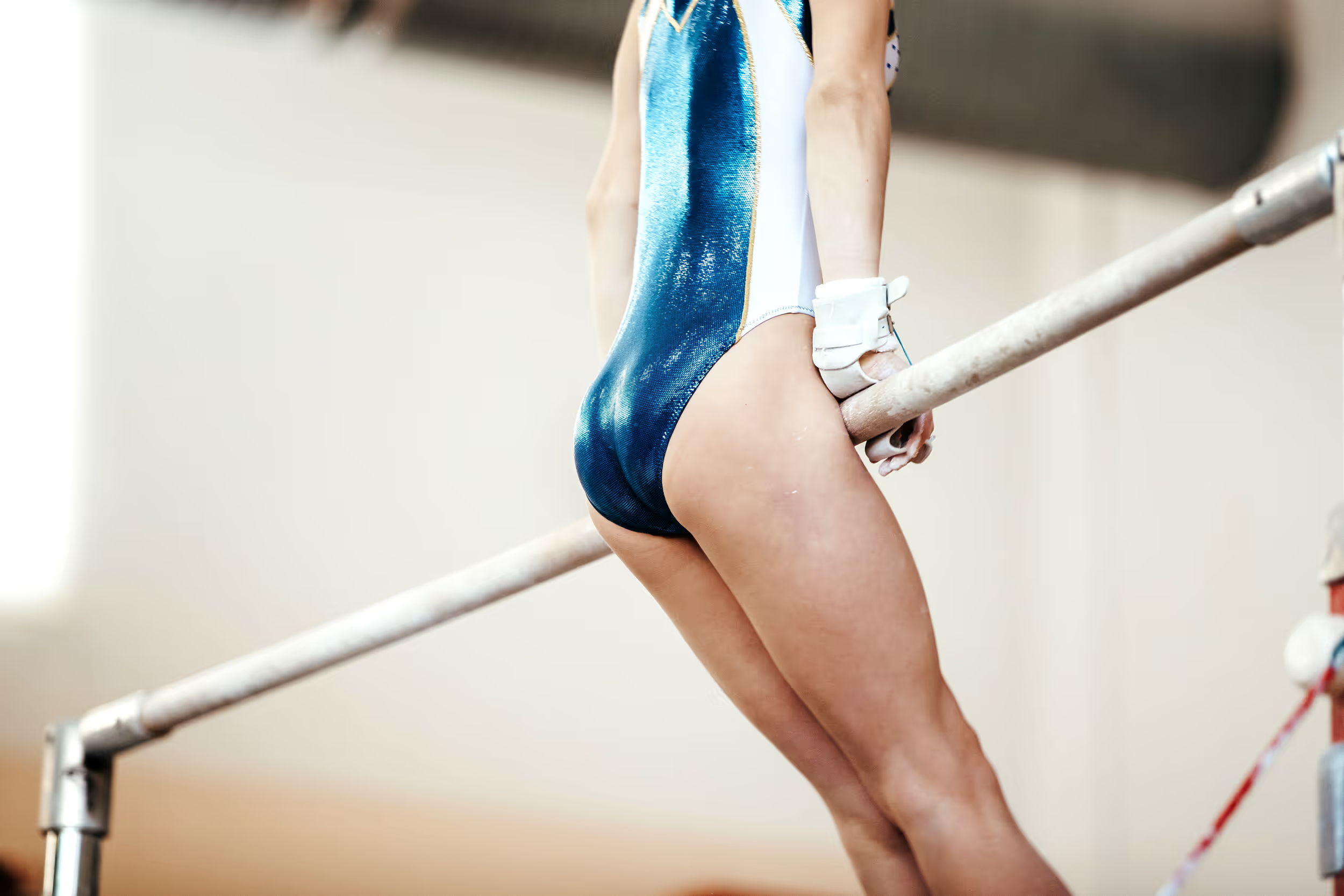
EVERY LEO TELLS A STORY
Sparkle, strength, and a uniform like no other sport — part superhero suit, part second skin.
FIRST LEOTARD
The one she picks out herself. The one that makes her stand a little taller in the mirror. It doesn't have to be expensive — it has to be hers.This is the leotard that starts everything. She might choose it for the color, the sparkle, or just because it feels right. Logic doesn't matter — pride does. When she puts it on for the first time, something shifts. She's not just going to gymnastics. She's a gymnast.Keep it. Even when it no longer fits. Years from now, it's the one she'll remember.

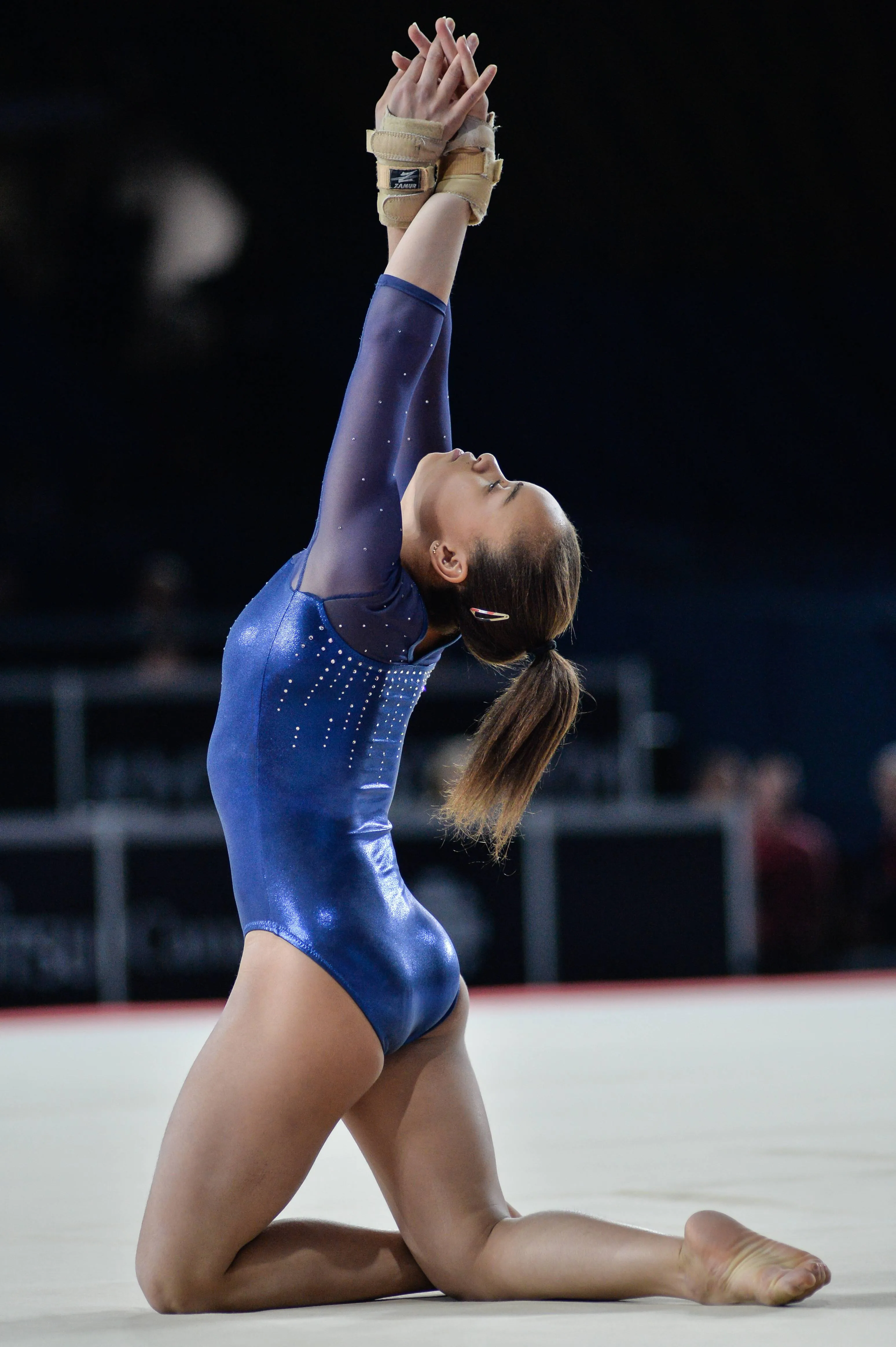
Competition Leotard
Long sleeves, full sparkle, competition-ready. When it matters most, she wants to feel unstoppable. This is the one she wears when the world is watching.Competition leotards follow the rules — long sleeves, modest cut, approved design. But within those rules, there's room to shine. Crystals catch the light. Colors pop against the apparatus. The right leo doesn't distract her — it fuels her.She'll salute the judges, take her breath, and begin. And in that moment, what she's wearing isn't costume. It's armor.
THE EVERYDAY LEO
Short sleeves, built to last. Practice after practice, wash after wash. Comfort, durability, and room to move — because podium training doesn't wait.This is the leotard that sees everything. The chalk dust. The sweat. The falls and the breakthroughs. It stretches when she stretches. It holds up when she doesn't.She might own three that look almost the same — because when something works, she doesn't want to think about it. She just wants to train.The everyday leo isn't about looking good. It's about feeling ready.