
Gymnastics Basics: Apparatus, Scoring, Leotards
Discover the world of women’s artistic gymnastics – from the Code de Pointage, how routines are scored, to the apparatus, the beauty of leotards, and the must-have equipment every gymnast loves.
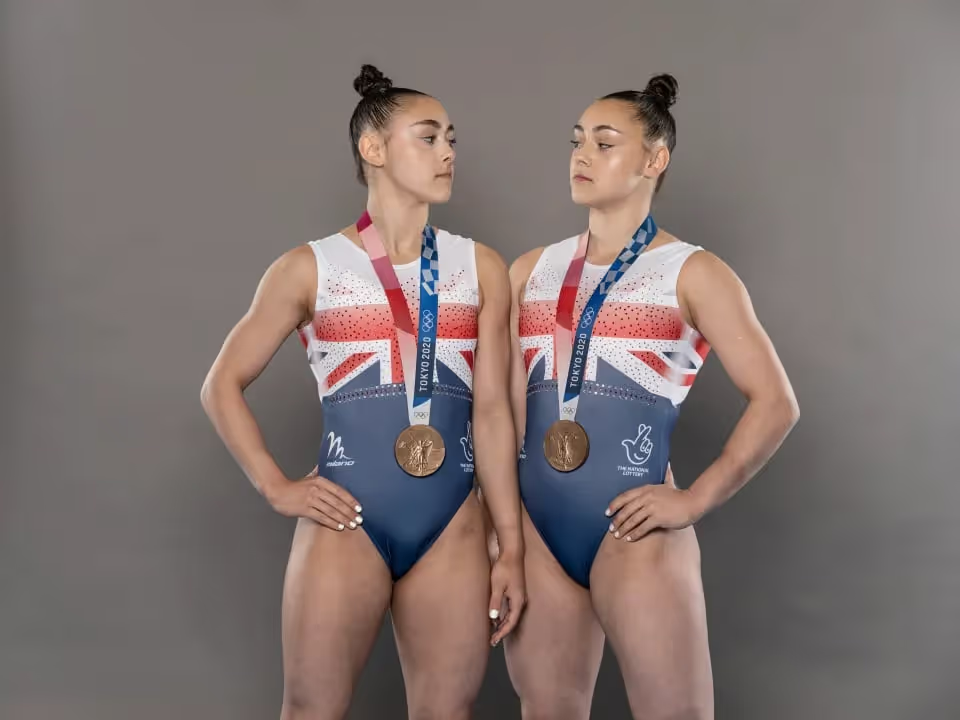
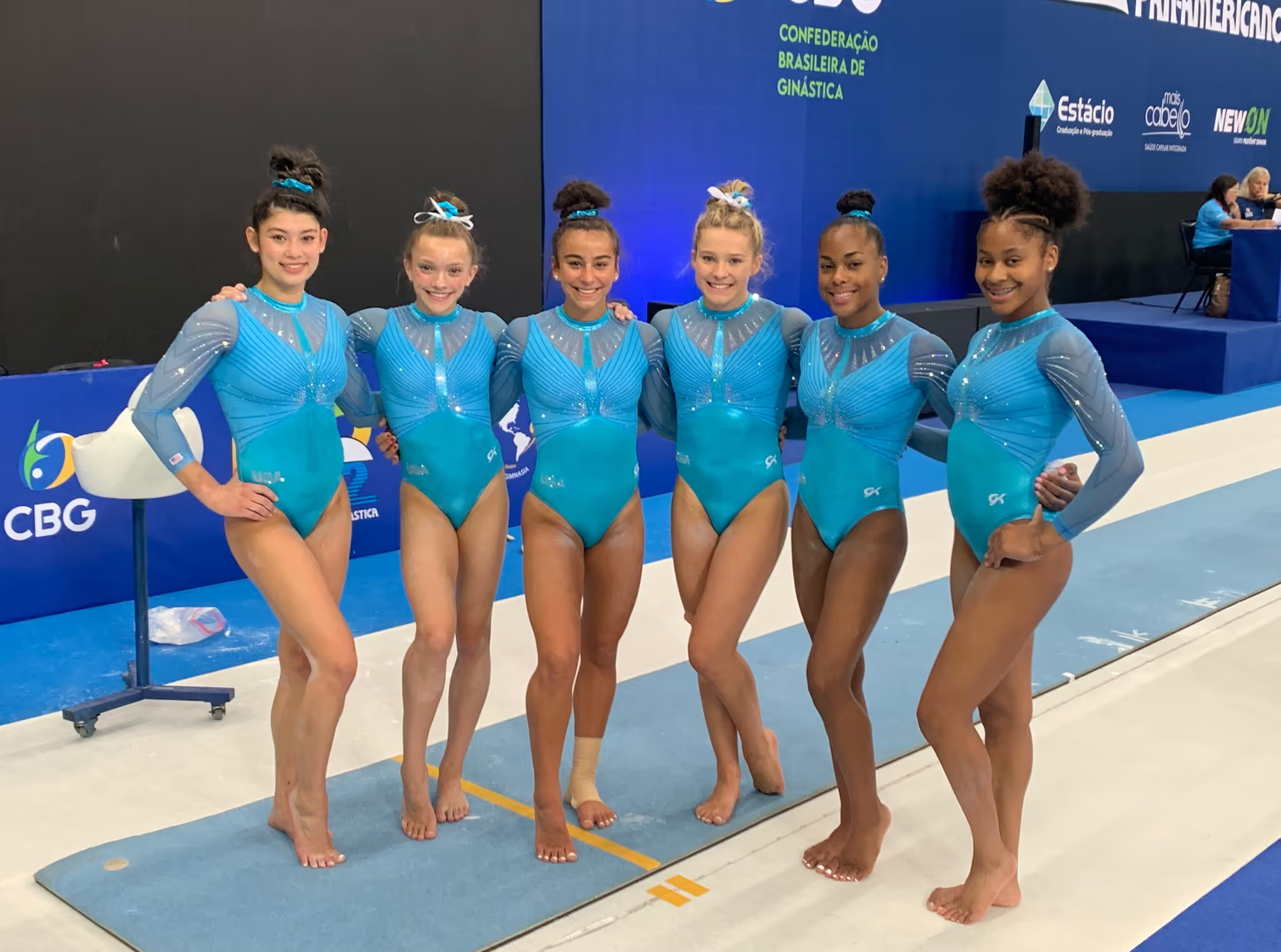
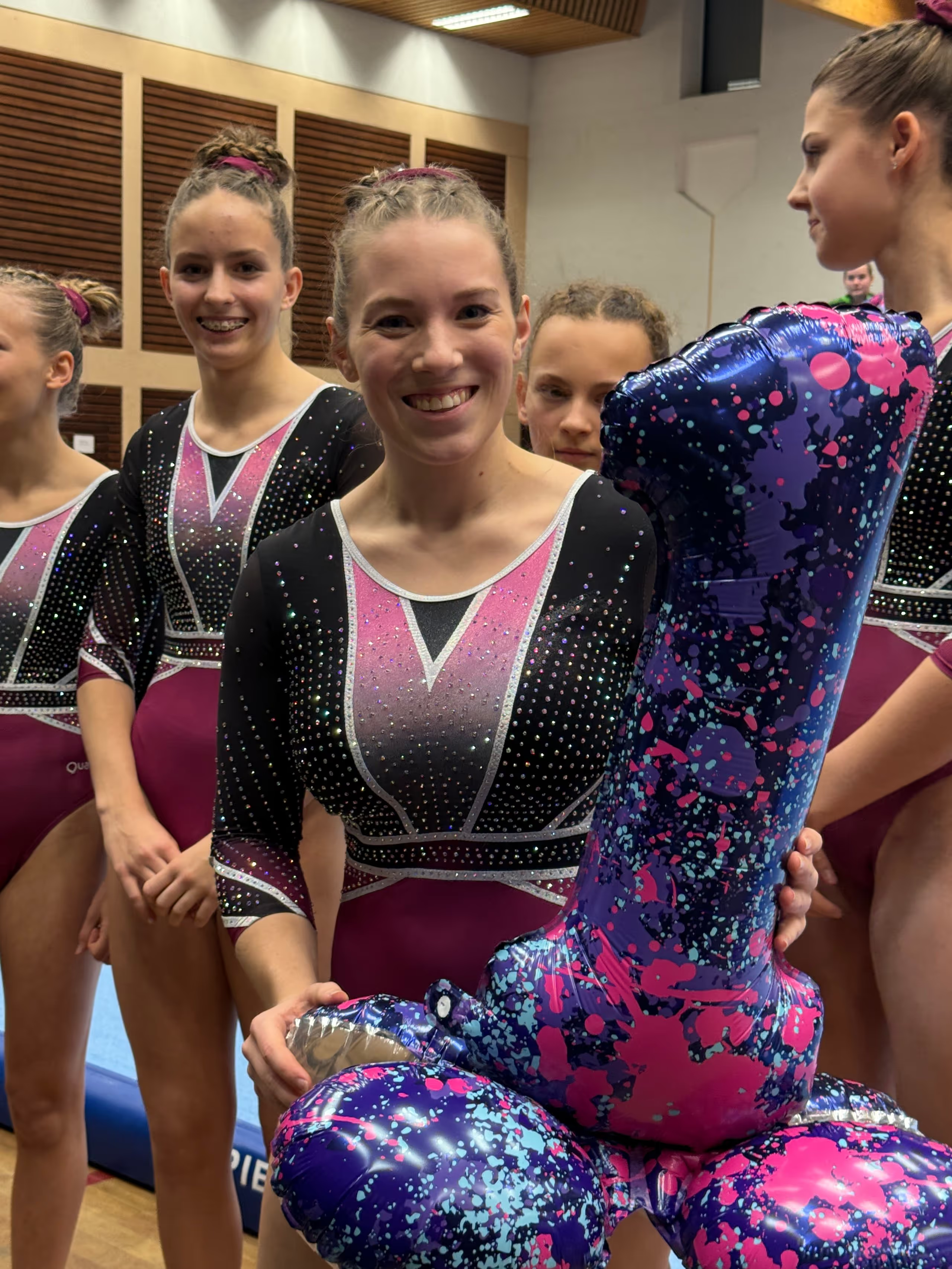




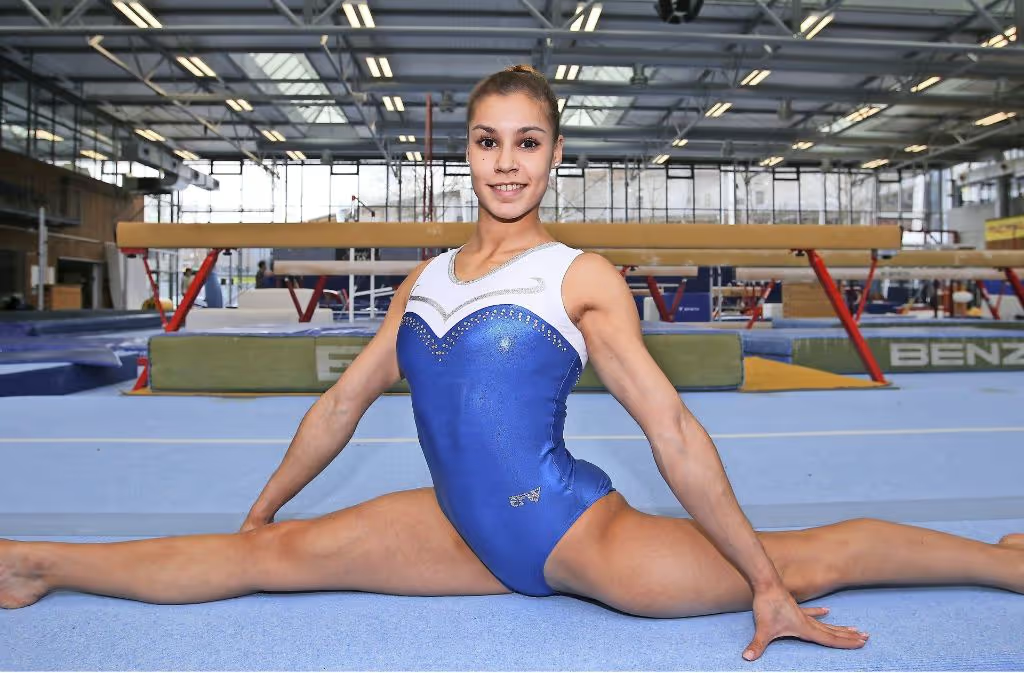
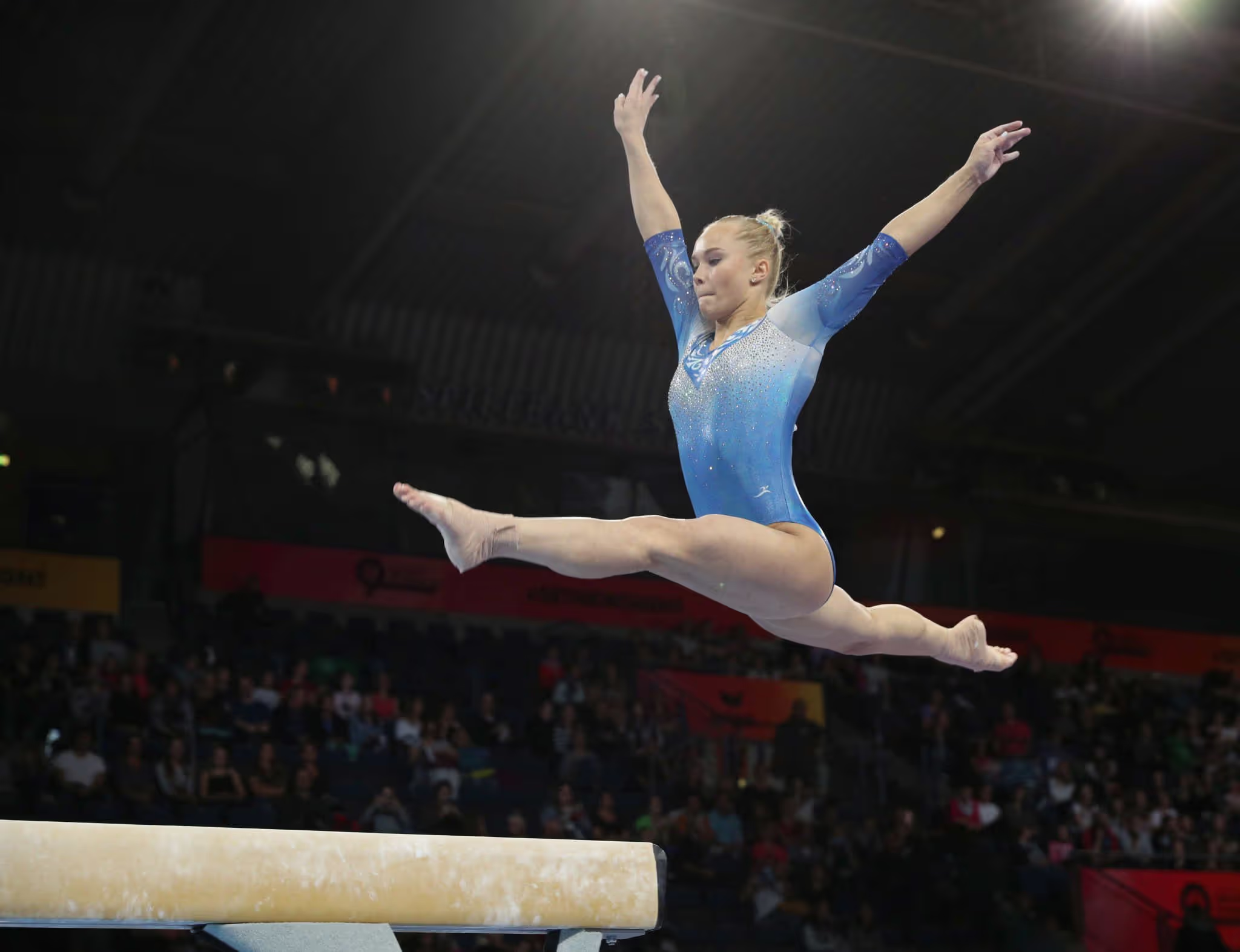

Beginner’s Guide to Gymnastics
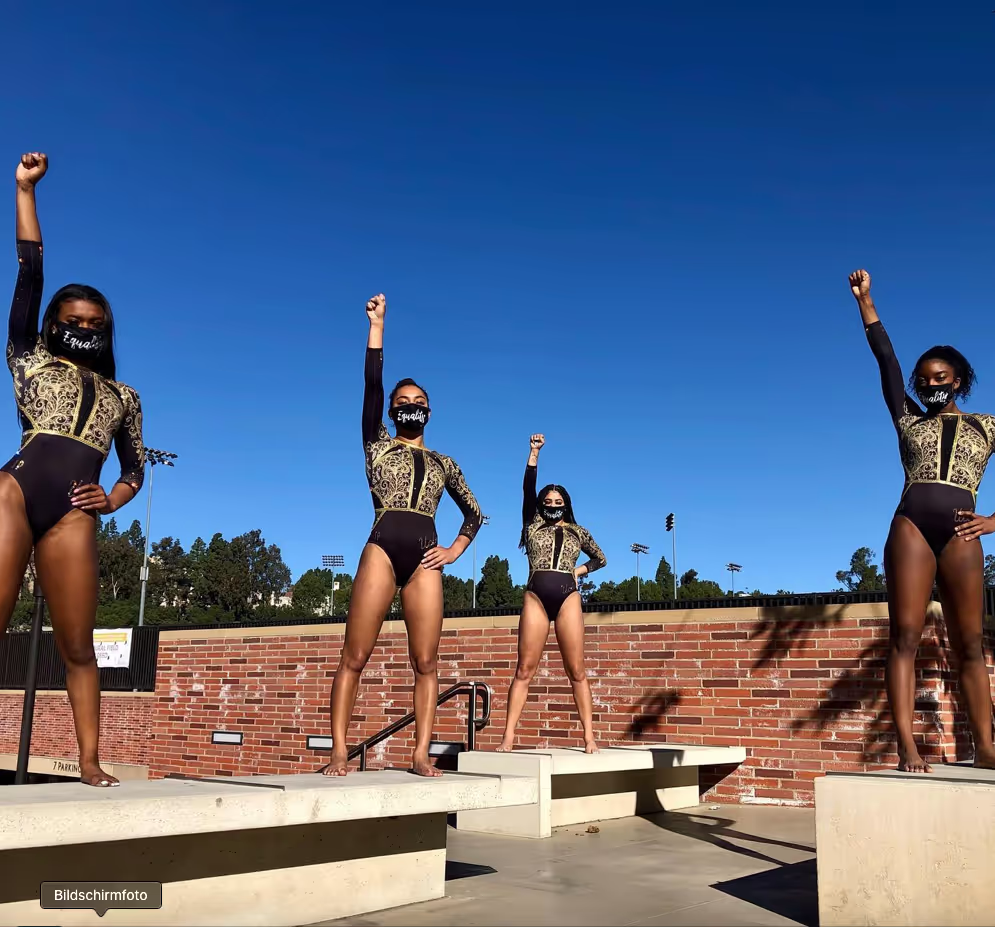
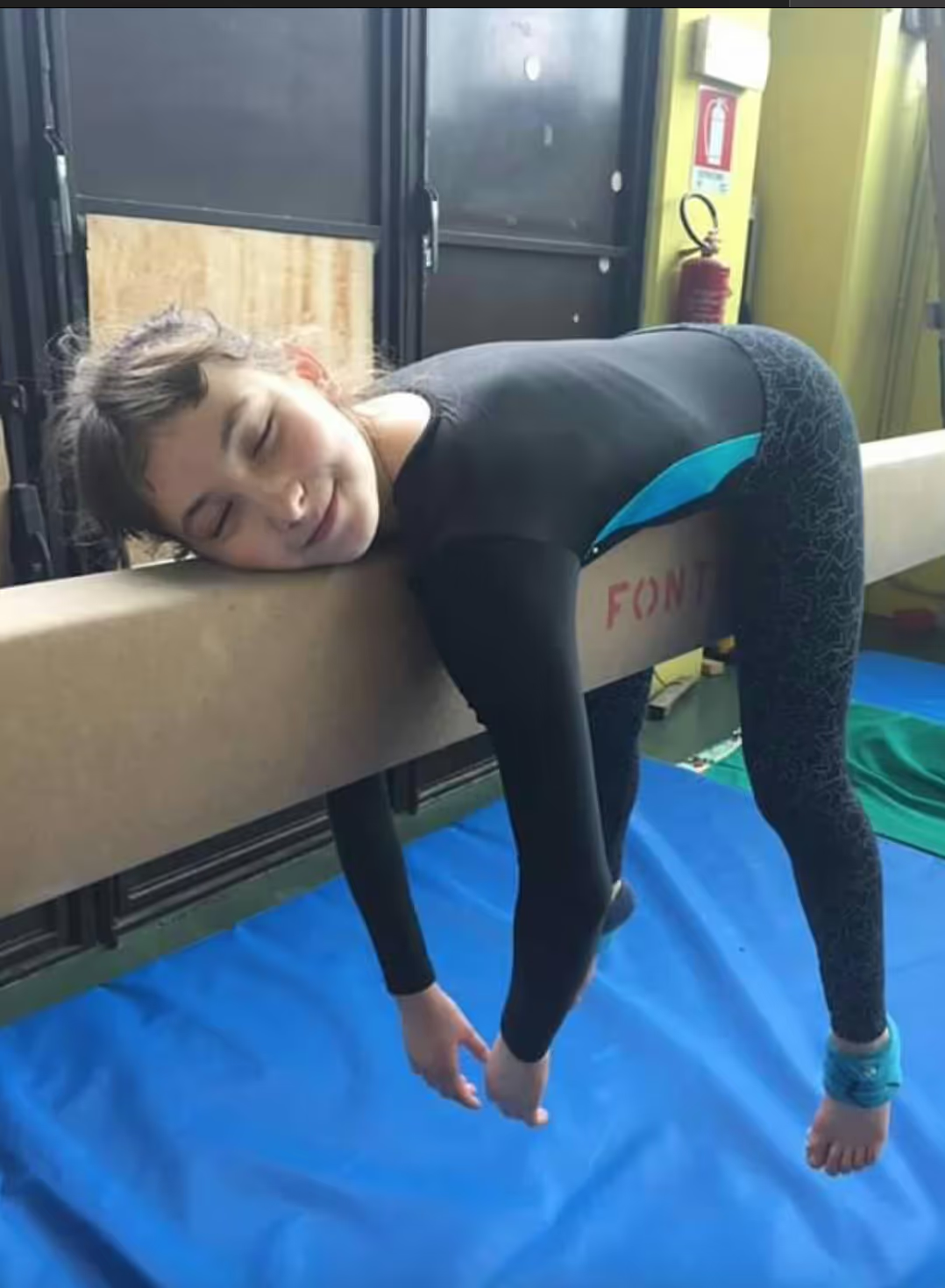
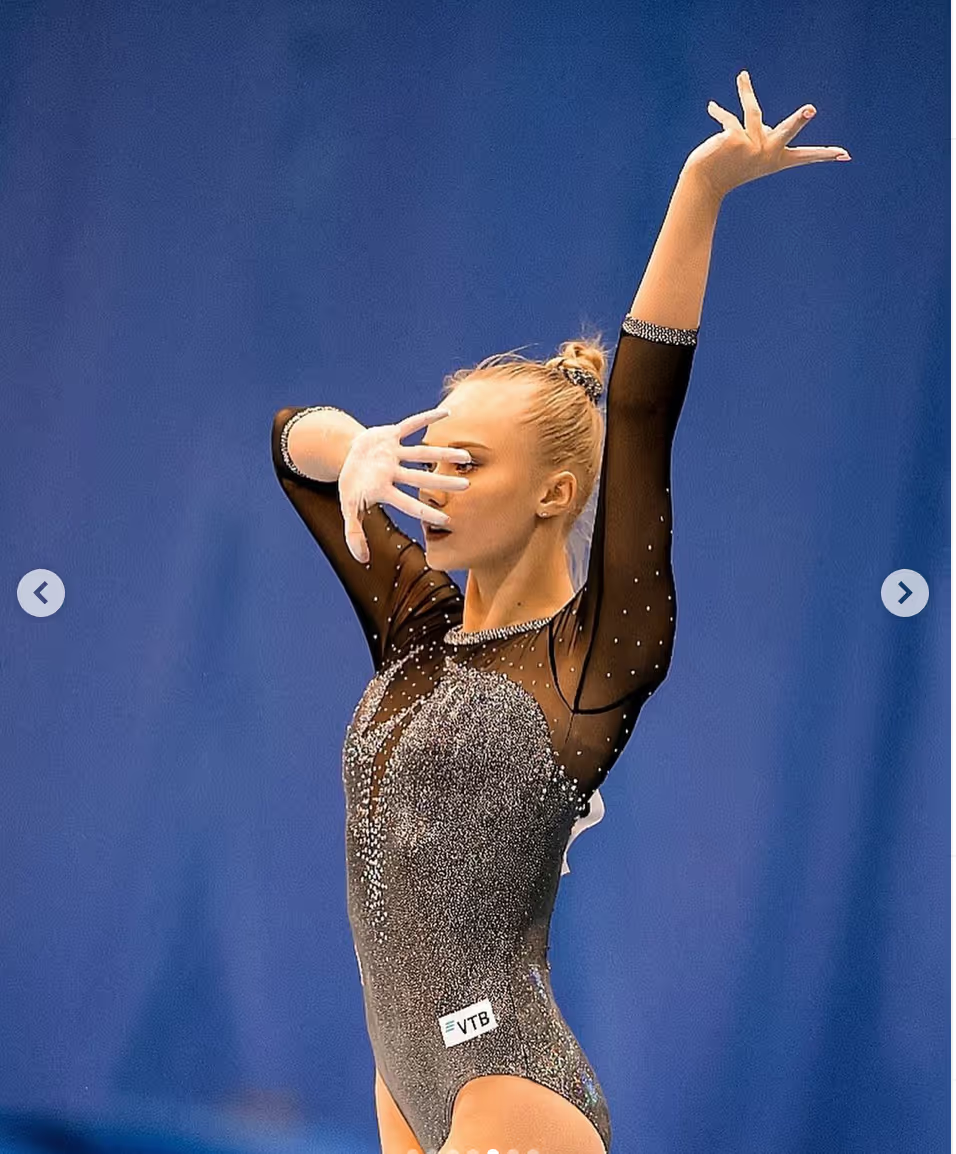
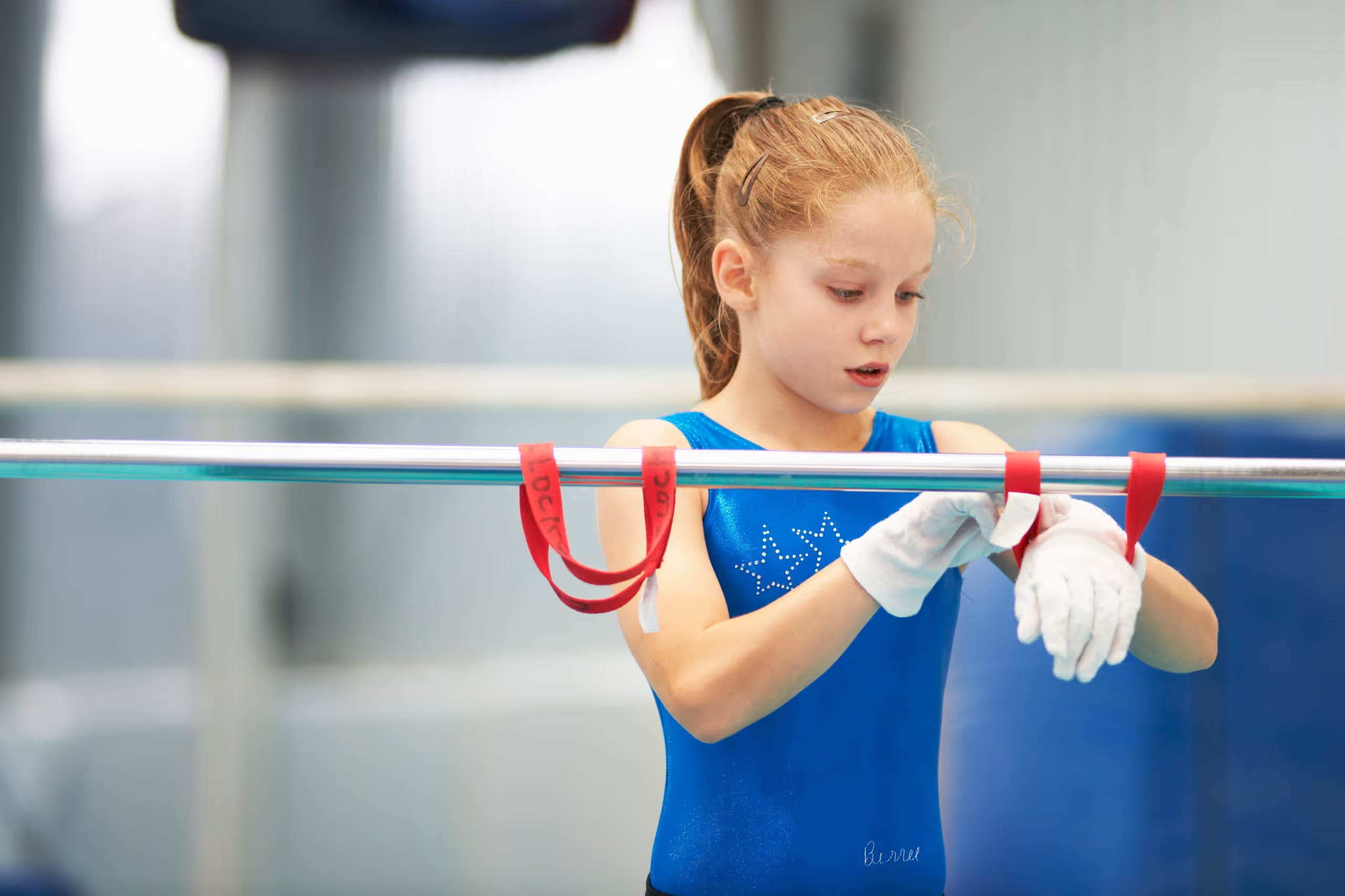
Endless possibilities. Each demands precision, power, and grace —
building the confidence to master them all
Vault (VT)
Explosive power and timing combine in a sprint down the runway and flight over the table.
Bars (UB)
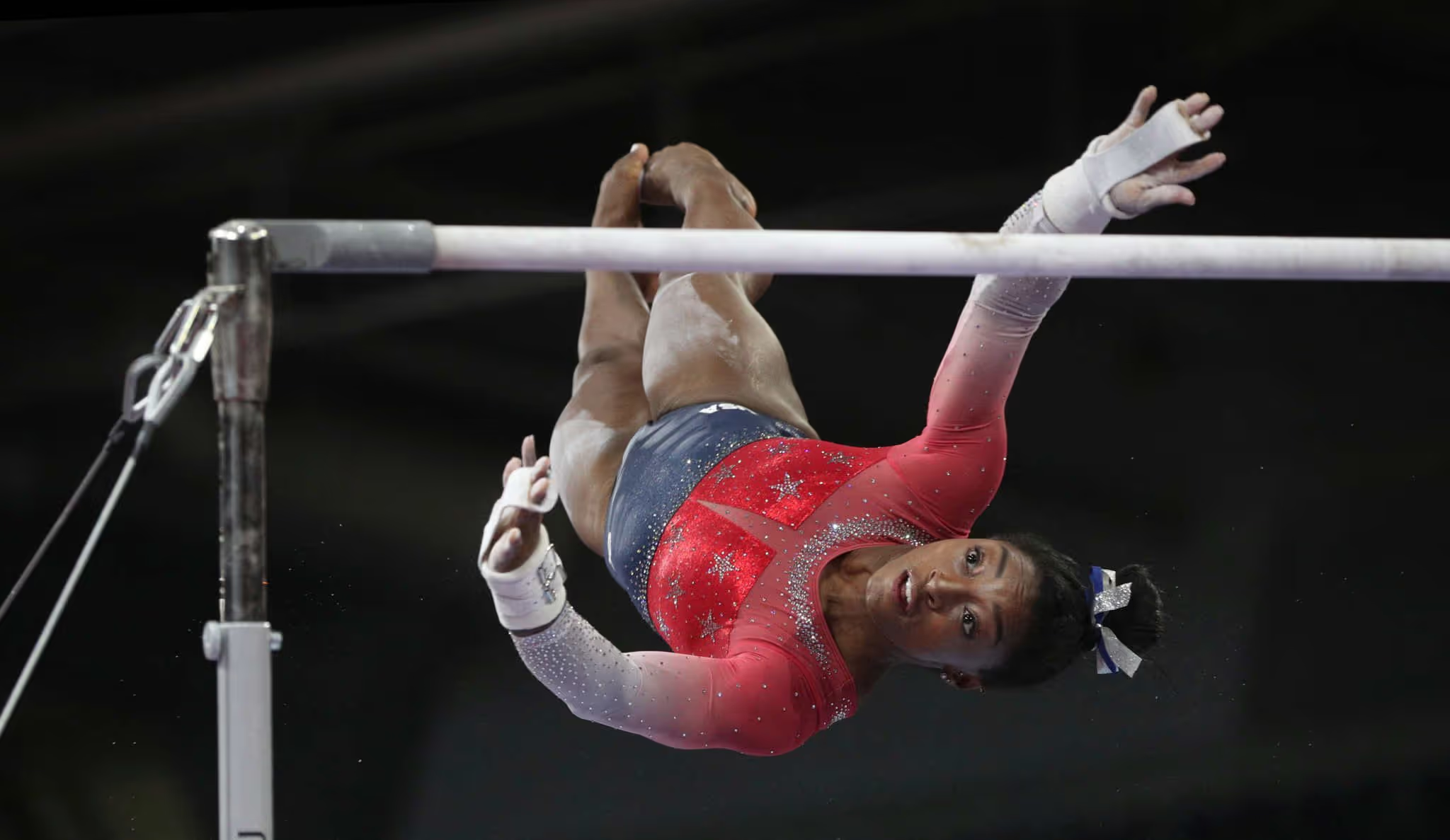
Uneven bars demand strength, swing, and aerial awareness as you release, fly, and catch again.
Beam (BB)
Balance, poise, and fearlessness on a four-inch line that challenges your mental edge.
Floor (FX)
Tumbling, dance, and artistry blend into a routine that reveals your personality and power.
Vault (VT):
This is where you learn to fly.
From your very first run-up to a world-class Yurchenko – the vault teaches girls
to be fast, fearless, and fierce.
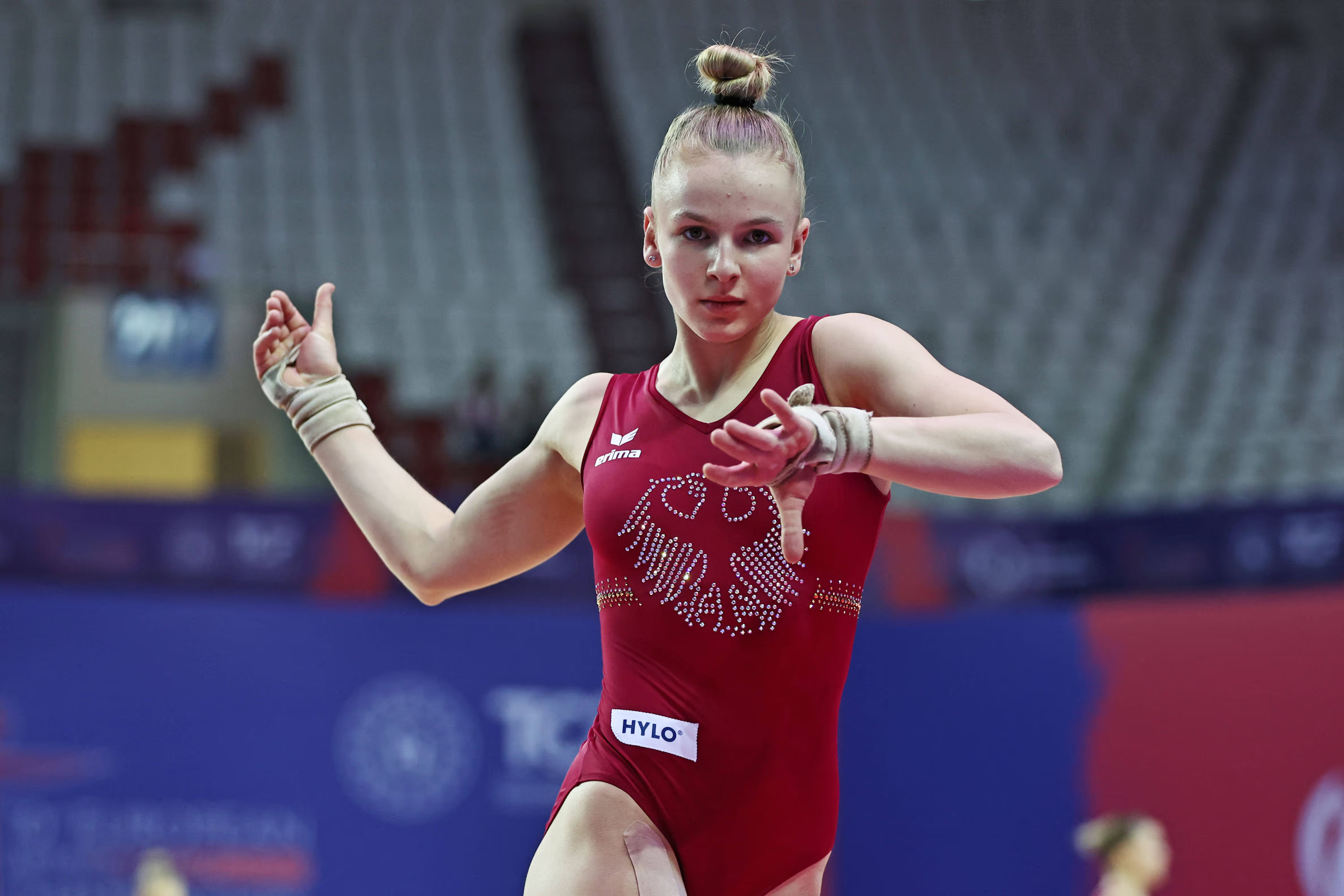
Phase 1:
Fast Feet, Fierce Focus
Every great vault begins with speed, rhythm and fierce focus.In this first phase, gymnasts build momentum with a powerful sprint and a perfectly timed jump onto the springboard. It’s not just about running fast – it’s about controlling every step, staying sharp, and setting up the launch to come. A clean, confident approach is the foundation for everything that follows – and the first place where power and precision meet.
.jpg)
Phase 2:
Explode, Rotate, Control
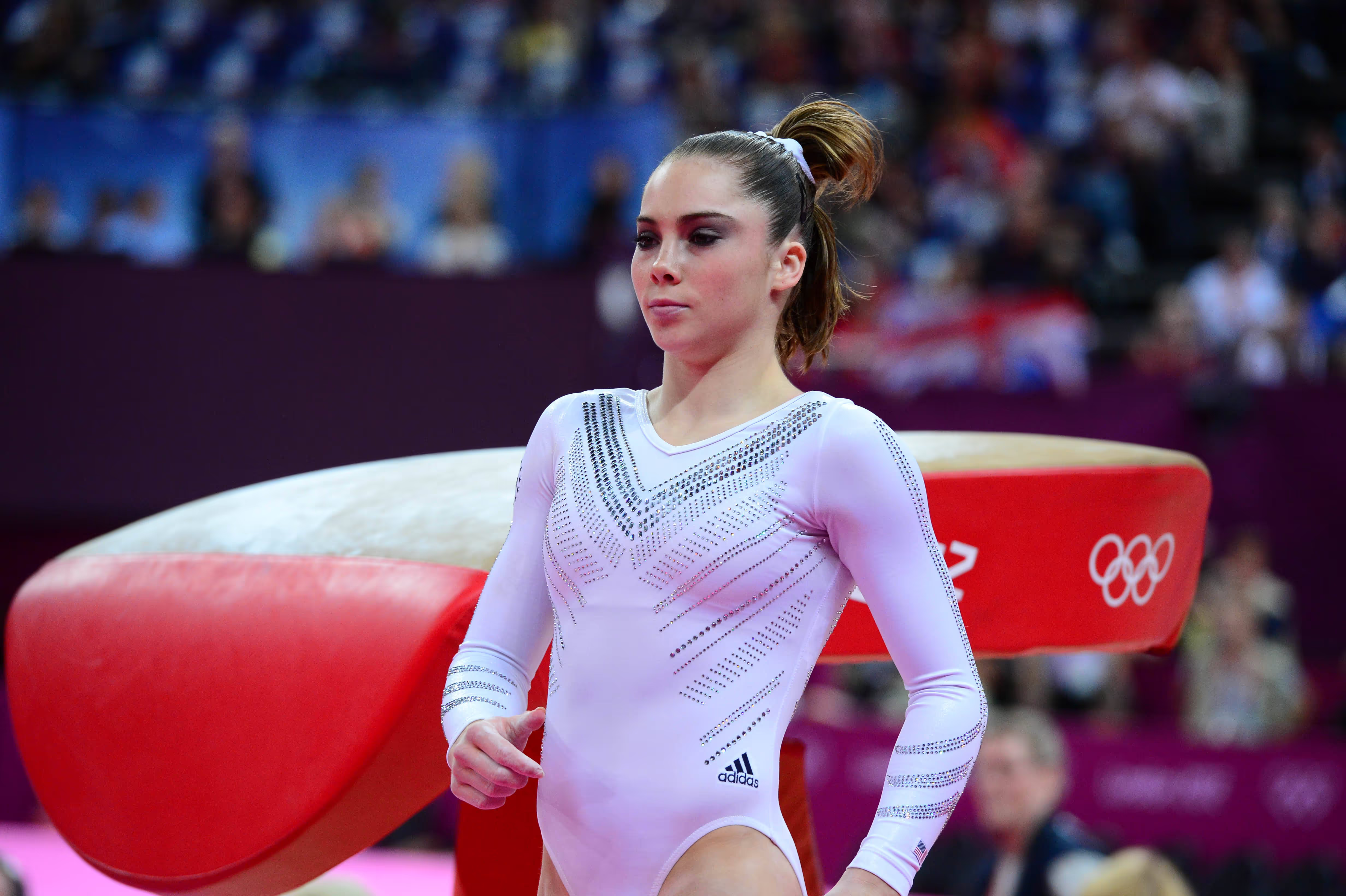
This second phase begins as the gymnast blocks explosively off the vault table and lifts into the air.
With perfect timing, body tension, and commitment, horizontal speed transforms into height and rotation. The push-off determines how high she flies, how fast she twists, and how well she can control the landing. Just a fraction of a second makes the difference between an average vault – and a great one.
Phase 3:
Land Strong, Stand Tall
The final phase is all about control.
After flying through the air, gymnasts must absorb the landing with strength, balance, and precision. Feet together, body tight, eyes forward – it’s the moment where discipline and confidence are visible in every detail.
A strong landing doesn’t just complete the vault – it defines it.
Vault: Key Facts
Full-speed runway
run-up speed
Maximum height in flight
Top 5 Female Vaulters
of the Last Olympic Cycle
A showcase of the five most successful female gymnasts across the last Olympic Games and three World Championships, ranked by their best individual vault result (Simone Biles not included – the G.O.A.T. gets her own spotlight).
| Total: 14.733
ADE CAREY (USA) WORLDS 2022
The vault specialist dominated Liverpool 2022 with her career-best 14.733 performance, showcasing the power and precision that made her Olympic floor champion. Her Cheng vault remains one of the most technically impressive in the sport.
| Total: 14.600
YEO SEOJEONG (SOUTH KOREA) Worlds 2023
South Korea's consistent vault star earned her first World Championship medal with 14.600 points in Antwerp. She represents the excellence of Asian gymnastics and has her own signature vault element named after her.
| Total: 14.500
JORDAN CHILES (USA) WORLds 2022
The versatile American gymnast secured silver behind teammate Jade Carey with her 14.500 performance in Liverpool. Her powerful vaulting complements her all-around abilities, making her a key component of Team USA's dominance.
| Total: 14.500
COLINE DEVILLARD (FRANCE)
WORLDS 2022
France's rising vault star claimed bronze with her 14.500 performance, matching Jordan Chiles' score in Liverpool. She has since become European Champion and represents the growing strength of European gymnastics on vault.
REBECA ANDRADE (BRAZIL) - WORLD CHAMPIONSHIPS 2023
The Brazilian powerhouse delivered a perfect 15.000 on her first vault to claim World Championship gold in Antwerp. She remains the only gymnast consistently challenging American dominance in vault finals.
Known for her explosive power and elegant execution, Rebeca Andrade has redefined Brazil’s place in elite gymnastics. Her vaults combine exceptional difficulty with near-flawless form – a rare blend. In Antwerp, her stuck landing and rock-solid block sent a clear message: she’s not just a contender, she’s a standard-setter. Despite injuries and setbacks, she’s become a symbol of resilience and excellence – and the pride of South American gymnastics.
Vault FAQ
Everything You Need to Know
From scoring and technique to vault types and competition rules – your most important questions
about women’s vaulting, clearly answered.
The Vault is one of the four women's apparatuses and features an explosive sprint, a springboard jump, and aerial elements performed off the vault table. It's all about power, precision, and fearless flight.
The runway is 25 meters long – giving gymnasts just enough distance to build up speed for lift-off. Every meter counts in the approach.
In artistic gymnastics, vaults are categorized into five official vault groups based on how the gymnast enters and pushes off the vaulting table. These groups determine the basic vault family and how the skill is valued in scoring. Here's a breakdown:
Group 1: Handspring vaults – A direct handspring entry followed by a salto or twist.
Group 2: Tsukahara vaults – A quarter- to half-turn onto the table followed by a back salto.
Group 3: Yurchenko vaults – A round-off onto the springboard, followed by a back handspring onto the table and a salto off.
Group 4: Round-off vaults with ½ turn onto the table – Rare vaults with unique backward entry mechanics.
Group 5: Handspring with ¼ or ½ turn onto the table – Forward-entry vaults with early twist before the salto.
Each group allows for different variations in body position (tucked, piked, layout) and twist combinations. The most common and powerful vaults today are Yurchenkos, but gymnasts aiming for medals often train multiple types to maximize difficulty and qualify for finals.
Top-level scores range between 14.000 and 15.500. Scores combine difficulty (D-score) and execution (E-score). Sticking the landing can be the difference between gold and bronze.
Vault L5: Do gymnasts always perform two vaults?
Not always. Two different vaults are only required in event finals. In team and all-around competitions, gymnasts perform just one.
Not always. In team and all-around competitions, gymnasts perform just one vault.
However, in the vault event final, they must perform two different vaults from different groups, with the average of both scores counting toward their final result.
To be eligible for the vault final in the first place, a gymnast must already perform two vaults during qualifications. This rule ensures that only versatile vaulters – with the ability to master multiple techniques – can compete for medals.
Top-level vault scores range between 14.000 and 15.500. A score above 14.500 is considered excellent. The final score is the sum of the D-score (difficulty) and E-score (execution), minus any penalties.
A vault becomes more challenging when it involves greater speed, more complex rotations, and higher risk during the flight phase. Several factors contribute to the overall difficulty:
Entry mechanics – For example, Yurchenkos require a round-off and back handspring before even touching the table, demanding precise technique and timing.
Number of twists or flips – The more rotations or twists performed in the air, the higher the D-score, but also the more control is required to stick the landing.
Vault group and body position – Vaults are divided into five families, and each group has different difficulty potentials. Layout positions (straight body) are harder than tucked or piked ones.
Landing control – A difficult vault is only complete if landed cleanly. Sticking the landing after complex rotations is one of the toughest challenges in gymnastics.
Height and distance – The gymnast must achieve both upward and outward flight, which requires explosive power and technique.
In short, the most challenging vaults combine power, precision, technical mastery, and fearlessness – all executed in just a few breathtaking seconds.
Judges evaluate both difficulty and execution. The D-score reflects the vault's value based on recognized elements. The E-score starts at 10.0, with deductions for form, amplitude, and landing. Vaults are over in seconds – every detail counts.
If a gymnast falls, a 1.0 deduction is applied. If she balks (runs but doesn’t go for the vault), she may receive one more attempt depending on the competition phase. Two balks or touching the board without vaulting can result in a zero.
Vault is fast, explosive, and highly adrenaline-driven – which makes it the perfect opening event in many competitions.
Starting with vault allows gymnasts to build momentum and mentally commit right from the start. It also helps the meet run efficiently, as vault requires a different setup than the other apparatus.
Additionally, because vault scores can vary widely, a strong start can give teams or all-around gymnasts a competitive edge from the very beginning.
Help Us Make
This Vault Even Better!
You spotted something missing? Know a fun fact or a useful question we didn’t cover? Add your input and help the next gymnast fly even further.

Swing Big, Stay Clean
Bars require fluidity, rhythm, and amplitude. Great gymnasts create massive swings through the bar using perfect technique and body tension. Every giant, half-turn and circle must be straight, extended, and clean – otherwise, deductions pile up fast.
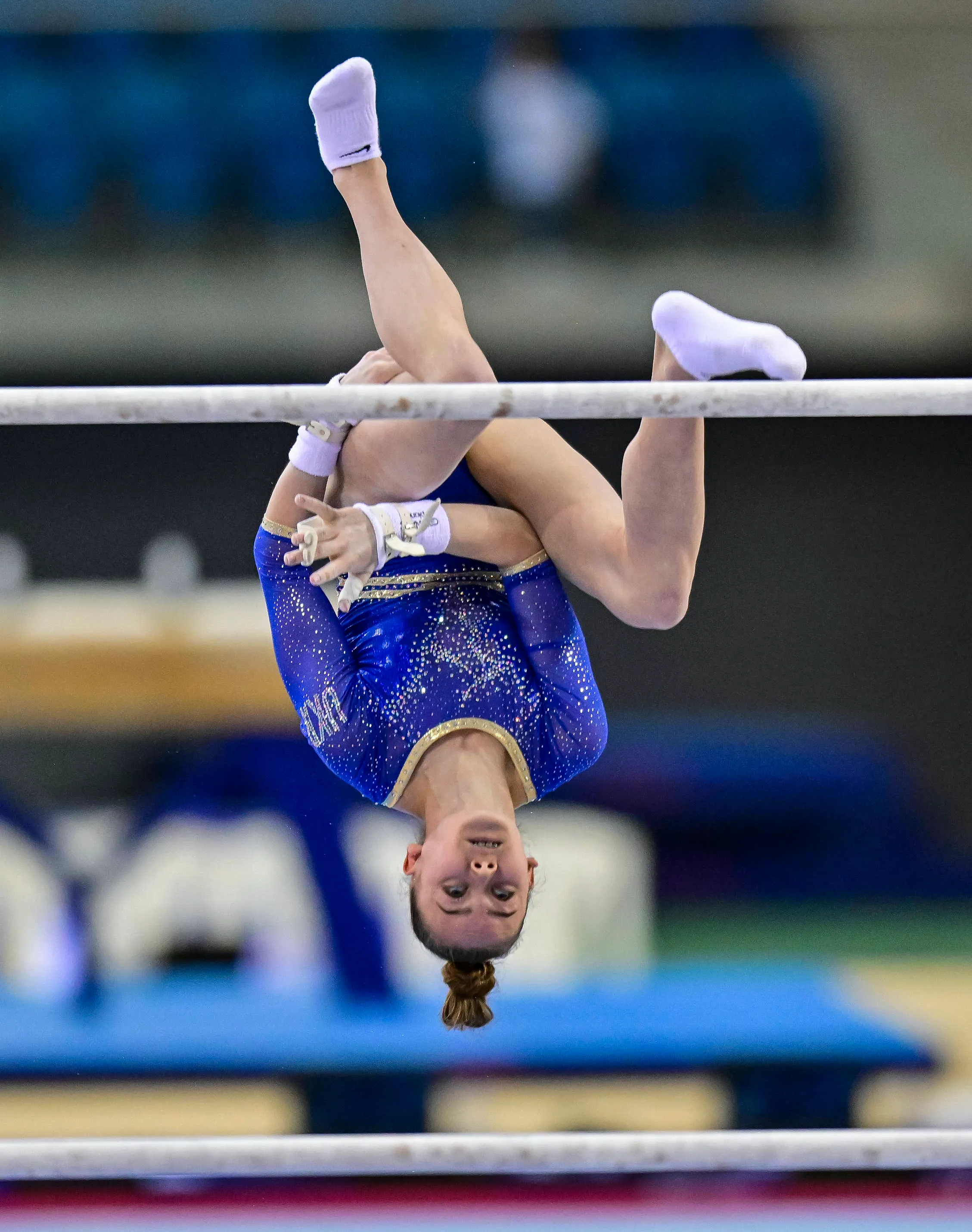
Release, Catch, Repeat
Top-level routines include multiple release moves – flying from high to low bar (or vice versa) with twists, somersaults, and perfect regrasp. Every release must be fearless, every catch secure. It’s where risk and reward live closest.
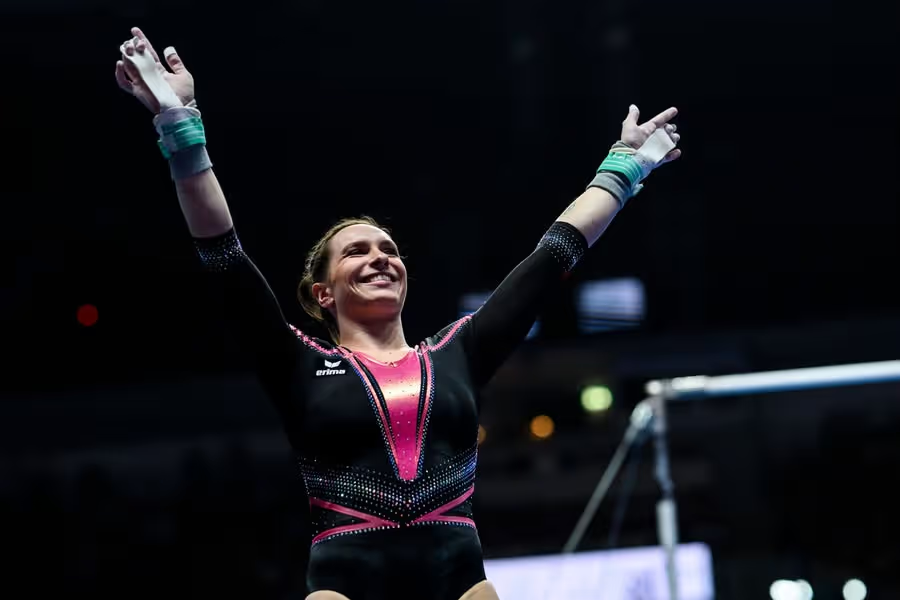
Stick the Landing
A bars routine is only as strong as its landing. After spinning through the air with twists and flips, gymnasts must stick the dismount cold. Judges reward not just difficulty – but how cleanly and confidently a gymnast ends her flight.
Uneven Bars (UB): Key Facts
Bar Height (High Bar)
Required Rotation
Minimum Elements
Top 5
Uneven Bars Specialists
of the Last Olympic Cycle
The five most outstanding uneven bars routines from the last Olympic Games and three World Championships – ranked by peak performance. (Simone Biles not included – the G.O.A.T. gets her own spotlight.)
QIU QIYUAN (CHINA) OLYMPICS 2024
The reigning world uneven bars champion delivered a masterful 15.500 routine to claim Olympic silver in Paris. Her technical precision and innovative release moves have established her as one of the most exciting bar workers in the world.
At just 17, she has already redefined China’s legacy on bars, blending tradition with fearless originality.
| Total: 14.600
WEI XIAOYUAN (CHINA)
WORLDS 2022
The Chinese specialist dominated Liverpool 2022 with her career-defining 14.966 performance to claim World Championship gold. Her fluid transitions and exceptional handstand positions showcase the artistry that defines elite uneven bars work.
SUNISA LEE (USA) OLYMPICS 2024
The defending Olympic all-around champion added another medal to her collection with a brilliant 14.800 bronze medal performance. Her consistency and competitive spirit continue to make her one of America's most reliable gymnasts.
| Total: 14.700
HUANG ZHUOFAN (CHINA)
WORLDS 2023
The Chinese beam specialist delivered a masterful 14.700 routine to claim World Championship silver in Antwerp. Her exceptional balance and innovative choreography have established her as one of the most artistic performers on beam.
KAYLIA NEMOUR (ALGERIA) - OLYMPICS 2024
The French-born gymnast made history by winning Algeria's first Olympic gymnastics gold medal with a stunning 15.700 performance. She became the first African gymnast to win Olympic gold in artistic gymnastics, revolutionizing the sport's global landscape.
Kaylia Nemour’s triumph was more than just a personal victory – it was a seismic moment for the entire sport. Born in France but competing for Algeria, she has become a symbol of perseverance, identity, and global representation in gymnastics. Her bars routine in Paris combined outrageous difficulty with effortless flow, earning one of the highest scores ever recorded on the event. Beyond the podium, her performance sparked celebration across Africa and inspired a new generation of athletes from underrepresented nations. With her success, Nemour is not just making history – she’s redrawing the map of elite gymnastics.
Uneven Bars FAQ
Rules, Skills & Scoring Explained
Everything you need to know about women’s uneven bars: from release moves and grip changes to scoring, routine composition, and common questions for fans and athletes.
Uneven bar routines include swings, handstands, release moves (letting go and catching the bar), transitions between the low and high bar, and a dismount. Top-level routines feature elements like Tkachevs, Pak saltos, and full-twisting double layouts.
A full uneven bars routine usually lasts 30 to 45 seconds. Unlike floor, there’s no time limit – but gymnasts must connect required elements without unnecessary pauses or repetition to avoid deductions.
Each routine receives two scores:
The D-score (difficulty) includes the eight highest-valued elements plus connection bonuses.
The E-score (execution) starts at 10.0, with deductions taken for bent arms, missed handstands, leg separations, and more.
The final score = D + E, minus any penalties.
If a gymnast falls, she receives a 1.0-point deduction and must remount within 30 seconds. Judges also deduct for loss of rhythm and breaks in the composition. A fall often makes it hard to qualify for finals or win medals.
In women’s artistic gymnastics, the uneven bars are set at two fixed heights:
High bar: approximately 250 cm
Low bar: approximately 170 cm
The horizontal distance between the bars is adjustable, usually between 130 and 180 cm, depending on the gymnast’s size and preferences. Proper setup is essential for safe transitions and optimal performance.
Difficulty comes from complex release moves, tight connections, and high-level transitions. Elements like E-rated releases, in-bar stalders, and mixed-grip pirouettes raise the D-score significantly.
A coach is allowed to stand next to the bars for safety, especially during release elements. However, if they physically touch the gymnast, it results in a 0.5-point deduction – even if it prevents a fall. Intentional or unintentional, a touch is always penalized.
To meet composition requirements, gymnasts must perform at least two different grip changes during the routine – such as switching from regular grip to eagle grip or mixed grip. Missing this can lead to composition deductions.
A senior bars routine must include at least eight counting elements, including one flight element, one bar change, one pirouette, and a dismount. Simpler routines or missing requirements lead to a lower D-score.
Popular high-difficulty dismounts include the full-twisting double layout (F), double front (E), and double tuck (D). The dismount plays a key role in the routine's final impression – and sticking the landing without steps can be the difference between gold and silver.
Help Us Upgrade This Routine
Is there a missing grip, skill, or explanation? We're building this platform together – and every smart suggestion helps raise the bar.
Balance Beam (BB):
No space for doubt. Just 10 centimeters
That’s about the width of a smartphone – and the space where gymnasts master balance, power, and unshakable focus under pressure.
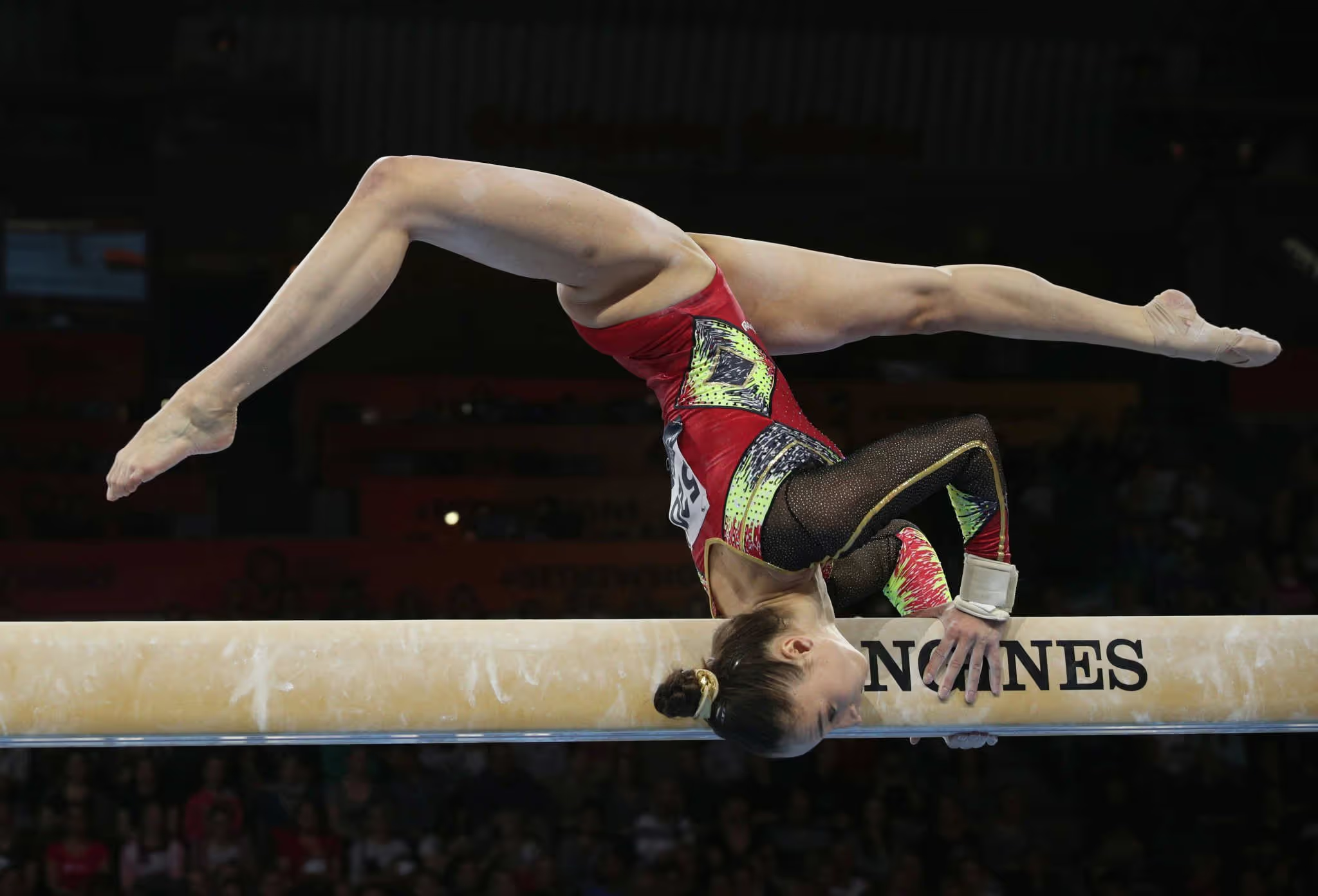
Balance, Body Tension, and Nerves of Steel
On a 10 cm-wide beam, even the smallest error can cost everything. Athletes need perfect posture, strong core control, and absolute focus. Every skill – from acrobatic series to turns – must land with precision and stillness.

Connection, Composition, and Flow
Beam routines aren’t just a checklist of skills – they are composed like a dance. Connections must be fluid and quick. Judges look for how elements are linked, the variety of movement, and how well the gymnast uses the full length of the beam.
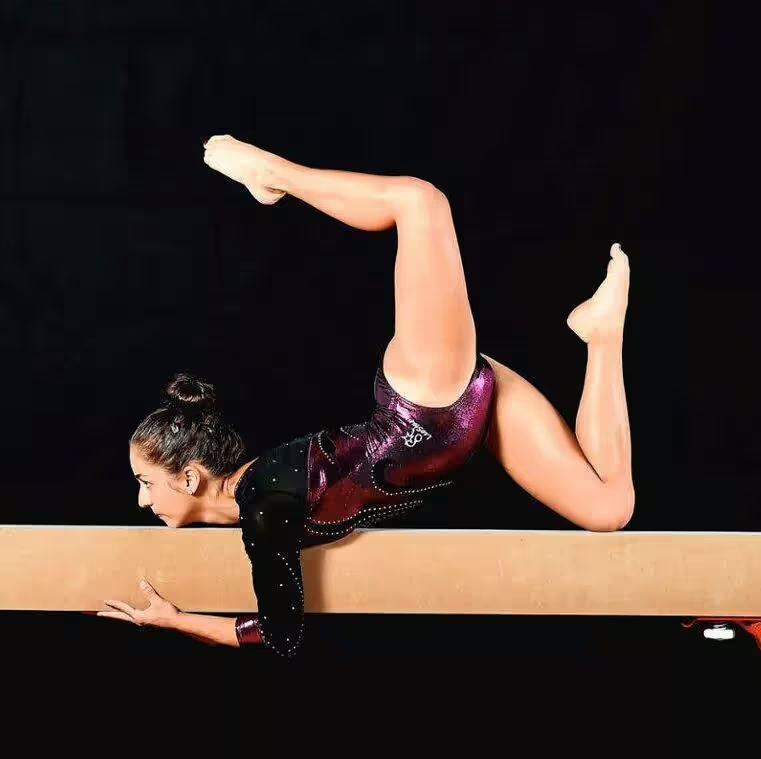
Calm Under Pressure – Confidence in Motion
Beam is the ultimate mental test. The best gymnasts look completely unfazed as they perform flicks, leaps, and full turns. The ability to stay calm under pressure – and show confidence with every step – is what turns a clean routine into a medal-worthy performance.
Balance Beam (BB): Key Facts
Beam Width
Beam Length
Max. Time per Routine
Top 5
Balance Beam Performers
of the Last Olympic Cycle
These five gymnasts delivered the most remarkable beam routines under pressure on the world’s biggest stages – Olympics and Worlds. (Simone Biles not included – the G.O.A.T. gets her own spotlight.)
ALICE D'AMATO (ITALY)
OLYMPICS 2024
Italy's golden girl stunned the gymnastics world with her 14.366 Olympic gold medal performance in Paris. She became the first Italian woman to win Olympic gold in artistic gymnastics, inspiring a new generation of Italian gymnasts.
| Total: 14.300
REBECA ANDRADE (BRAZIL)
WORLDS 2023
Brazil's gymnastics queen showcased her versatility with a 14.300 bronze medal performance in Antwerp. Her powerful tumbling and confident presentation on beam complement her dominance across all four events.
| Total: 14.100
SANNE WEVERS (NETHERLANDS) WORLDS 2023
The 2016 Olympic beam champion returned to form with a 14.100 performance in Antwerp, proving her enduring class on the apparatus. Her unique style and exceptional balance continue to captivate audiences worldwide.
| Total: 14.066
ASHIKAWA URARA (JAPAN)
WORLDS 2023
Japan's beam specialist impressed with her 14.066 performance in Antwerp, showcasing the precision and artistry that defines Japanese gymnastics. Her graceful presentation and technical excellence represent the future of beam work.
ZHOU YAQIN (CHINA) - WORLD CHAMPIONSHIPS 2023
The Chinese beam specialist delivered a masterful 14.700 routine to claim World Championship silver in Antwerp. Her exceptional balance and innovative choreography have established her as one of the most artistic performers on beam.
Zhou Yaqin’s performance combined quiet intensity with rare precision – every movement deliberate, every transition seamless. Her fluid style, rooted in classical Chinese technique, mesmerized audiences and judges alike. With a D-score of 6.500 and near-flawless execution, she reminded the world that artistry still matters at the highest level. Zhou’s beam work not only earned her silver, but also revived international admiration for elegance and control in a field often dominated by power.
Balance Beam FAQ
Rules, Scoring, and Skills Explained
Your most important questions about women’s balance beam – from deductions and falls to required elements, scoring, and what makes this event so uniquely challenging.
The beam is only 10 cm (4 inches) wide – about the width of a smartphone – and routines include jumps, acrobatic series, and turns. It’s a true test of balance, confidence, and body control under pressure.
Beam scores are composed of two parts: the D-score (difficulty, based on the elements performed) and the E-score (execution, starting from 10.0 and reduced for wobbles, form breaks, or falls). The final score is the sum of both.
A fall results in a 1.0-point deduction from the E-score. The gymnast must remount within 30 seconds and continue her routine. Falls affect not only the score but also rhythm and mental focus.
According to FIG rules, a routine must include:
– an acro series (e.g., back handspring + layout)
– a dance series (e.g., leap + jump)
– a full turn
– a dismount
– and other skills to meet the minimum difficulty.
The maximum time allowed is 90 seconds. Routines going over the time limit receive a 0.1 deduction. Most elite gymnasts keep their routines around 75–85 seconds to stay within rhythm and focus.
Gymnasts often take a moment to mentally prepare before risky elements like acro series or dismounts. However, excessive pauses can lead to rhythm deductions. Beam is about flow, not hesitation.
Yes – touching the beam to steady oneself (e.g. grabbing with a hand) is allowed, but results in an execution deduction. Graceful recovery is crucial to minimize the point loss.
Artistry includes rhythm, expression, connection of elements, and fluidity. Judges look for a confident and elegant performance, not just technical skill. Beam is as much about style as substance.
Through repetition, mental imagery, and specific drills. Many gymnasts start with low beams, work on soft mats, and build up slowly. Confidence is trained just like any physical skill.
The FIG standard height for women’s balance beam is 125 cm from the floor. While it’s adjustable in training gyms, competition beams are always set at this official height.
Let’s Keep This Beam Balanced
See a wobble in the content? Know something that could improve this page? Share your insight and help us stay steady and sharp.

Power That Flies, Control That Lands
A great floor routine starts with raw power – but it must be mastered. Tumbling passes include double saltos, twists, and intricate combinations, all launched from explosive leg strength. But every takeoff must have a clean landing – with no hops, no steps, just precision.
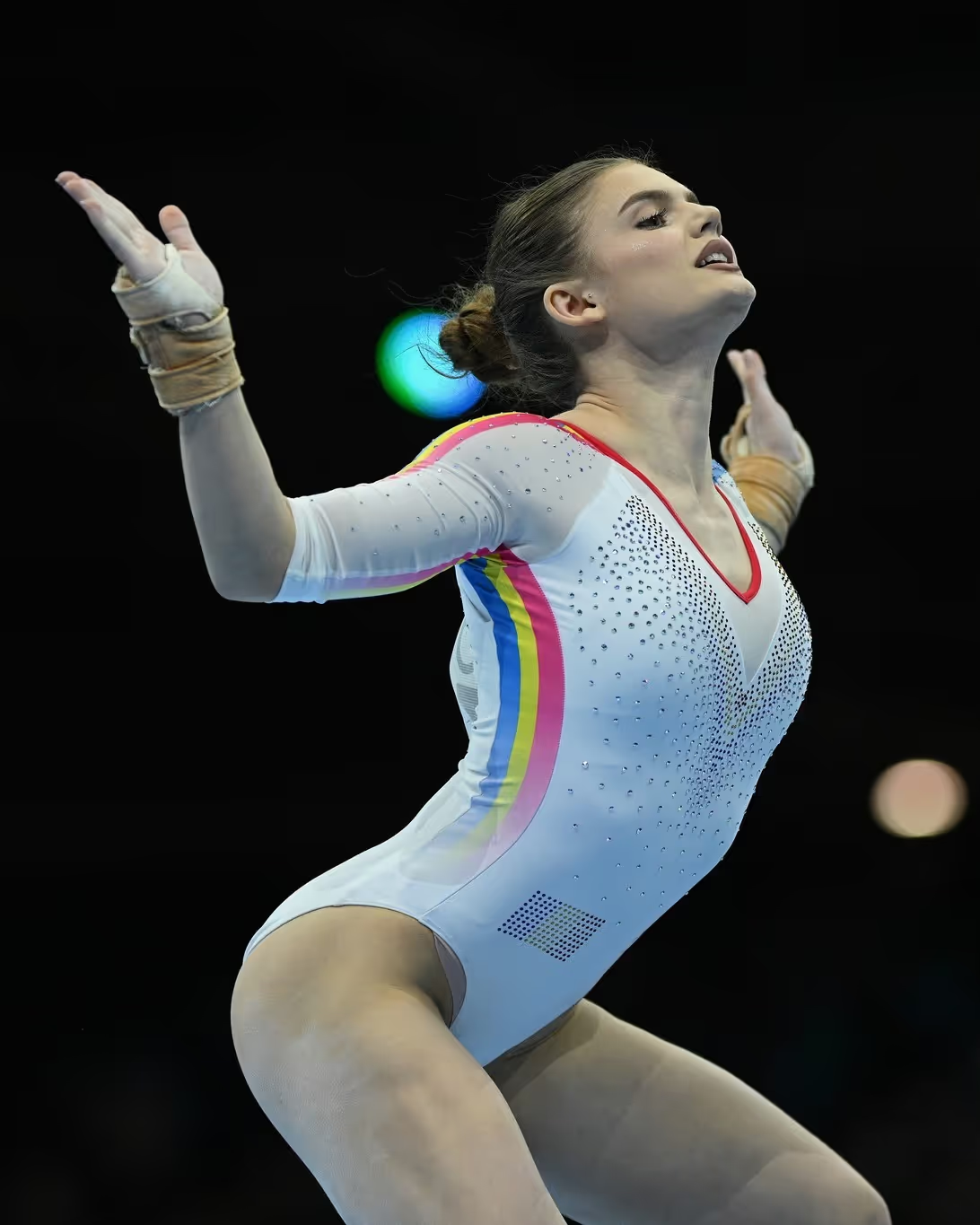
Grace in Motion, Expression with Purpose
Floor isn’t just about flips – it’s about flow. Dance elements, leaps, turns, and choreography must blend into one seamless performance. Expression, rhythm, and presence are judged just like difficulty. Every step counts, and every move tells a story.
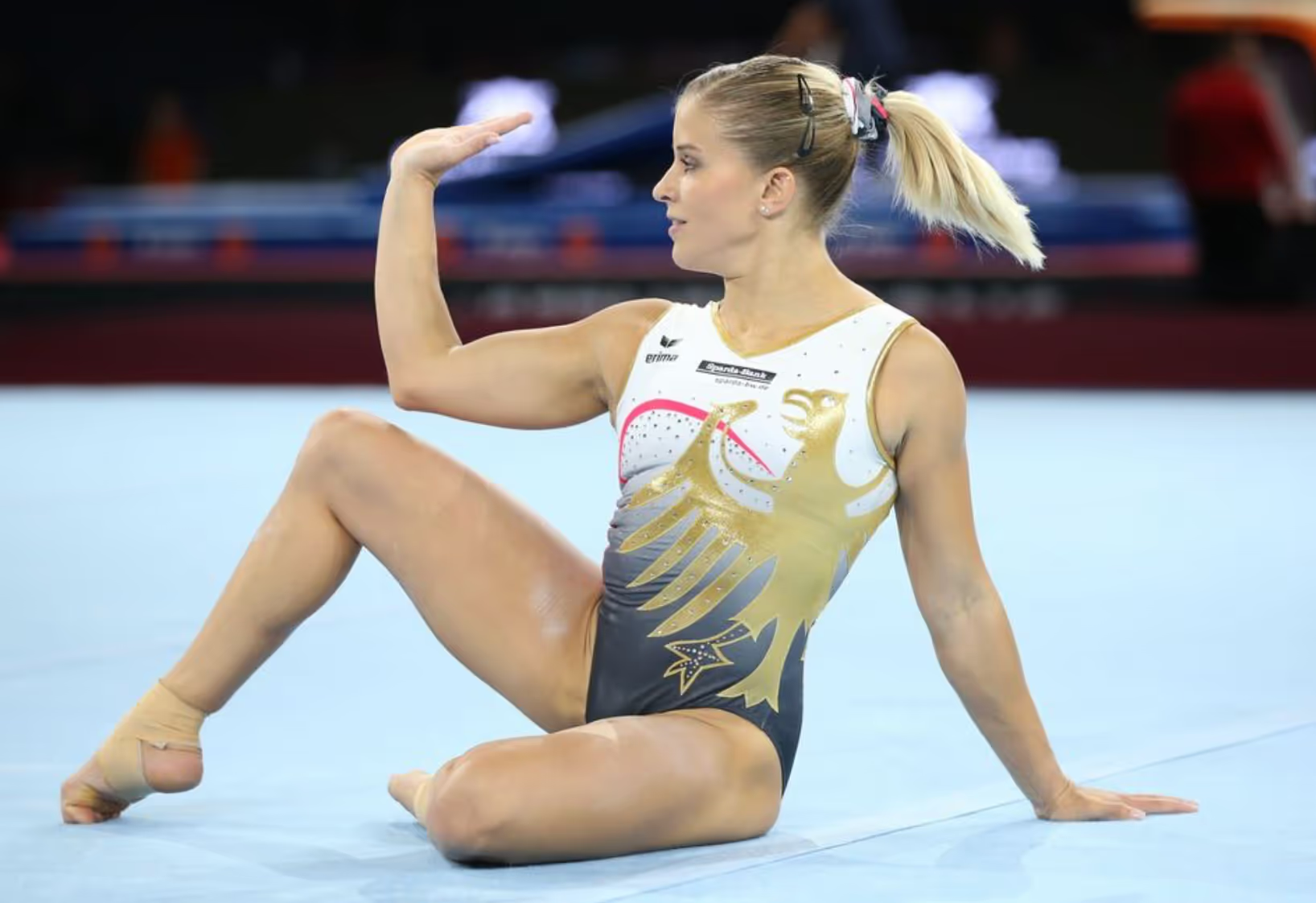
Stick to the Music. Own the Moment
Music isn’t just background – it’s your partner. From timing your passes to matching your expressions, the best routines are musical masterpieces. Whether it's bold and sassy or slow and poetic – this is where gymnasts reveal who they are.
Floor Exercise (FX): Key Facts
Full-speed runway
Tumbling Lines
Routine Time Limit
Top 5
Floor Exercise Artists
of the Last Olympic Cycle
From explosive tumbling to elegant choreography – these five routines defined the floor exercise over the last Olympic Games and World Championships.
(Simone Biles not included – the G.O.A.T. gets her own spotlight.)
| Total: 14.200
JESSICA GADIROVA (GREAT BRITAIN) WORLDS 2022
The British powerhouse claimed World Championship gold with her dynamic 14.200 performance in Liverpool. Her powerful tumbling and expressive choreography have established her as Great Britain's leading floor exercise specialist.
| Total: 13.966
FLAVIA SARAIVA (BRAZIL)
WORLDS 2023
Brazil's veteran gymnast earned World Championship bronze with her elegant 13.966 routine in Antwerp. Her artistic maturity and consistent execution demonstrate the longevity possible in elite gymnastics.
| Total: 13.833
JORDAN CHILES (USA)
WORLDS 2022
The versatile American gymnast secured World Championship silver with her powerful 13.833 performance in Liverpool. Her athletic tumbling and improved artistry showcase her evolution as a complete gymnast.
| Total: 13.766
SABRINA VOINEA (ROMANIA)
WORLDS 2023
Romania's rising star impressed with her 13.766 performance in Antwerp, representing the resurgence of Romanian gymnastics. Her technical precision and competitive spirit embody the proud tradition of Romanian floor exercise.
REBECA ANDRADE (BRAZIL) - WORLD CHAMPIONSHIPS 2023
Brazil's superstar delivered a spectacular 14.500 silver medal performance in Antwerp, combining explosive tumbling with infectious musicality. Her charismatic floor routines have made her one of the most beloved gymnasts in the world.
That night, no one ignited the crowd like Rebeca – the arena roared with every landing and danced with her every step. She was the undisputed queen of the night, owning the floor not just with difficulty, but with presence. Her performance blurred the line between sport and art, reminding the world why gymnastics can be pure joy.
Floor Exercise FAQ
Music, Moves, and Scoring Explained
Get the answers to your most common questions about women’s floor routines – from tumbling rules and required elements to choreography, music, and how artistry affects the score.
The maximum duration is 90 seconds. A timer starts when the gymnast begins her first movement and stops with her final pose. If a routine exceeds the limit, 0.1 points are deducted from the final score. Most elite gymnasts stay within 75–90 seconds for optimal pacing and stamina.
Just like on other apparatus, the score combines the D-score (difficulty value of selected elements and connections) and the E-score (execution, starting from 10.0). Judges also evaluate artistry, choreography, music interpretation, and expression. Falls or form breaks lead to deductions.
A complete floor routine must contain:
At least three acrobatic elements (e.g. flips, twists)
Dance elements (leaps, turns, jumps)
A connection between dance and acro
A salto in the final tumbling line
Choreographic variety to showcase expression and musicality
Not for full credit. While a gymnast can repeat an element, only one instance of the same skill counts toward the D-score. Variety in passes is rewarded, and identical repetitions may result in value reductions.
Yes – gymnasts (together with coaches and choreographers) select their own music, which must be instrumental and free of lyrics. The music must match the athlete’s personality, enhance performance quality, and comply with time and rhythm regulations. Musical expression is a scoring factor.
Floor routines are performed on a 12×12 meter mat, marked by white lines. If any part of the gymnast’s body touches beyond the line, a 0.1 deduction is taken per occurrence. Judges monitor this with boundary sensors and floor judges.
Choreography connects the routine’s different parts and gives gymnasts time to recover their breath, reset focus, and match their movements to the music. It also contributes to artistry and overall flow – both of which are key to a high E-score.
No. According to FIG rules, only the gymnast’s leotard and body movements are allowed. Props, costumes, or lyrics in the music are strictly prohibited. The performance must rely on movement quality and creativity alone.
Gymnasts may perform up to four tumbling diagonals across the floor. Most elite routines include all four, ending with a salto dismount. The quality and difficulty of these passes heavily influence both D- and E-scores.
A crucial one. Judges assess how well the gymnast expresses the music, uses the full floor area, connects elements, and performs with confidence and style. Artistry deductions can occur for robotic movements, lack of rhythm, or poor choreography. A routine should tell a story and captivate.
Make This Floor
Shine Even Brighter
Got a great question, correction, or tip to add? This is your stage too – help us polish the details and create the perfect routine.
Talent. Truth. Fire.
All in one newsletter – straight from the heart of women’s artistic gymnastics