Reese Esponda has to change her floor routine before Worlds
A skill accepted in Jesolo is now in question. Patrick Kiens explains why Reese Esponda is rebuilding her routine — with a commentary by Matthias Wellmer.
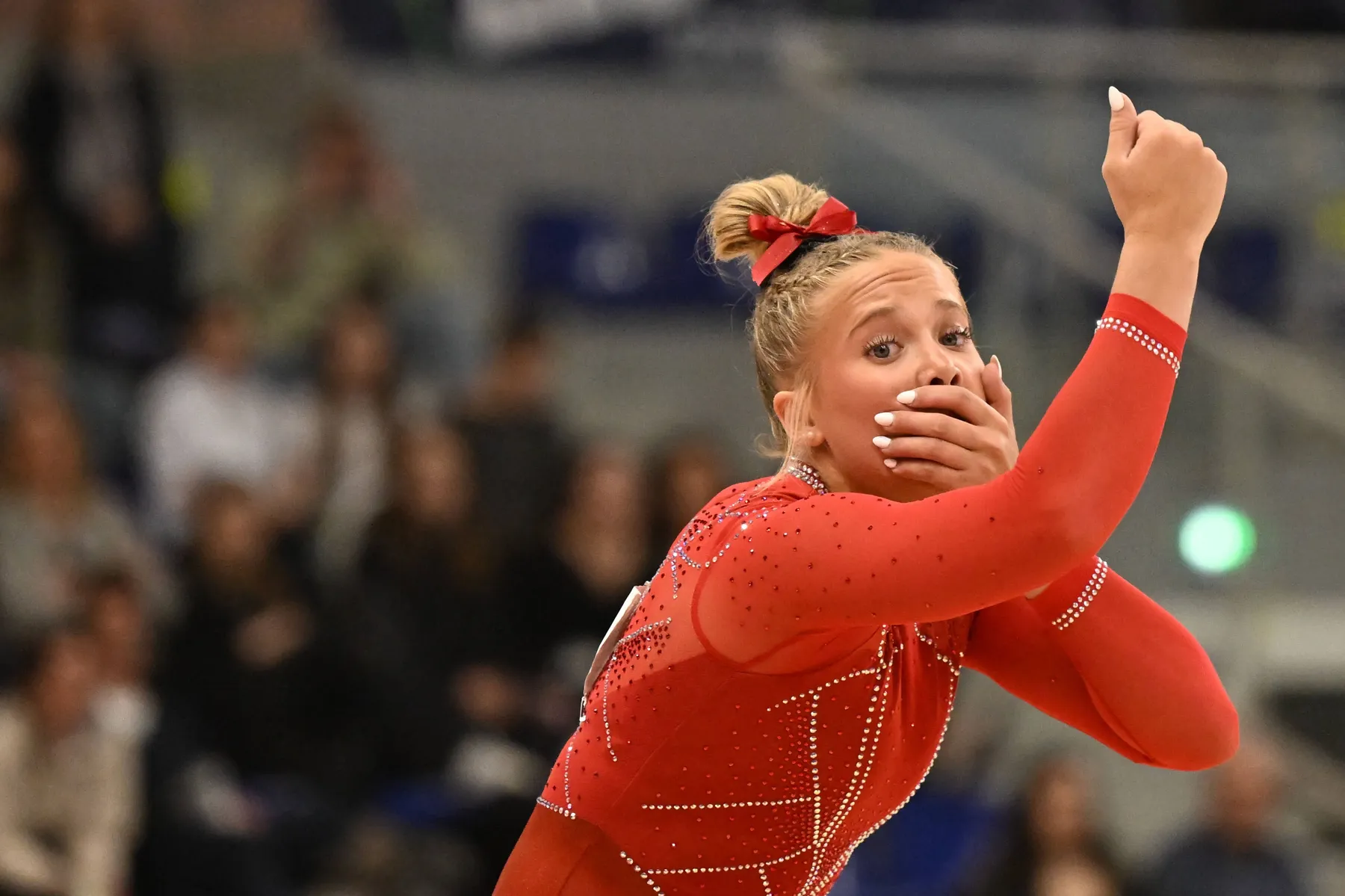 IMAGO / ABACAPRESS
Days before the World Championships in Rotterdam, Reese Esponda has to change her floor routine. Her coach, Patrick Kiens, explains the issue in a GymCastic interview published on 14 October: the FIG is questioning how one element is classified.
A forward salto that counts as sideways
Esponda connects a barani — a forward salto with a half twist — to a double back tuck. According to Kiens, the FIG considers the twist in her execution to start too early. The element is therefore being treated as sideways rather than forward.
The distinction matters. Under section 13.3 of the Code of Points, a floor routine must include both a backward and a forward salto within its acrobatic lines. That composition requirement is worth 0.5 points. A sideways element does not fulfil the forward requirement.
Kiens says this removes Esponda’s only forward salto. Keeping the routine unchanged would therefore cost her the 0.5 requirement. Giving the element an A value would not resolve that problem.
No objection in Jesolo
Kiens points to Jesolo: at the FIG-sanctioned meet, with Donatella Sacchi as head judge, the element had not been flagged. He says Category 1 and 2 judges had also seen it without raising an objection.
“It’s also, I think, not fair to the athlete.”
Patrick Kiens · GymCastic, 2:44
“It has consequences for the consistency,” Kiens says. The change also affects the D-score and could have consequences for the US lineup. His simplest alternative is a familiar connection: a front tuck step-out into a double back tuck.
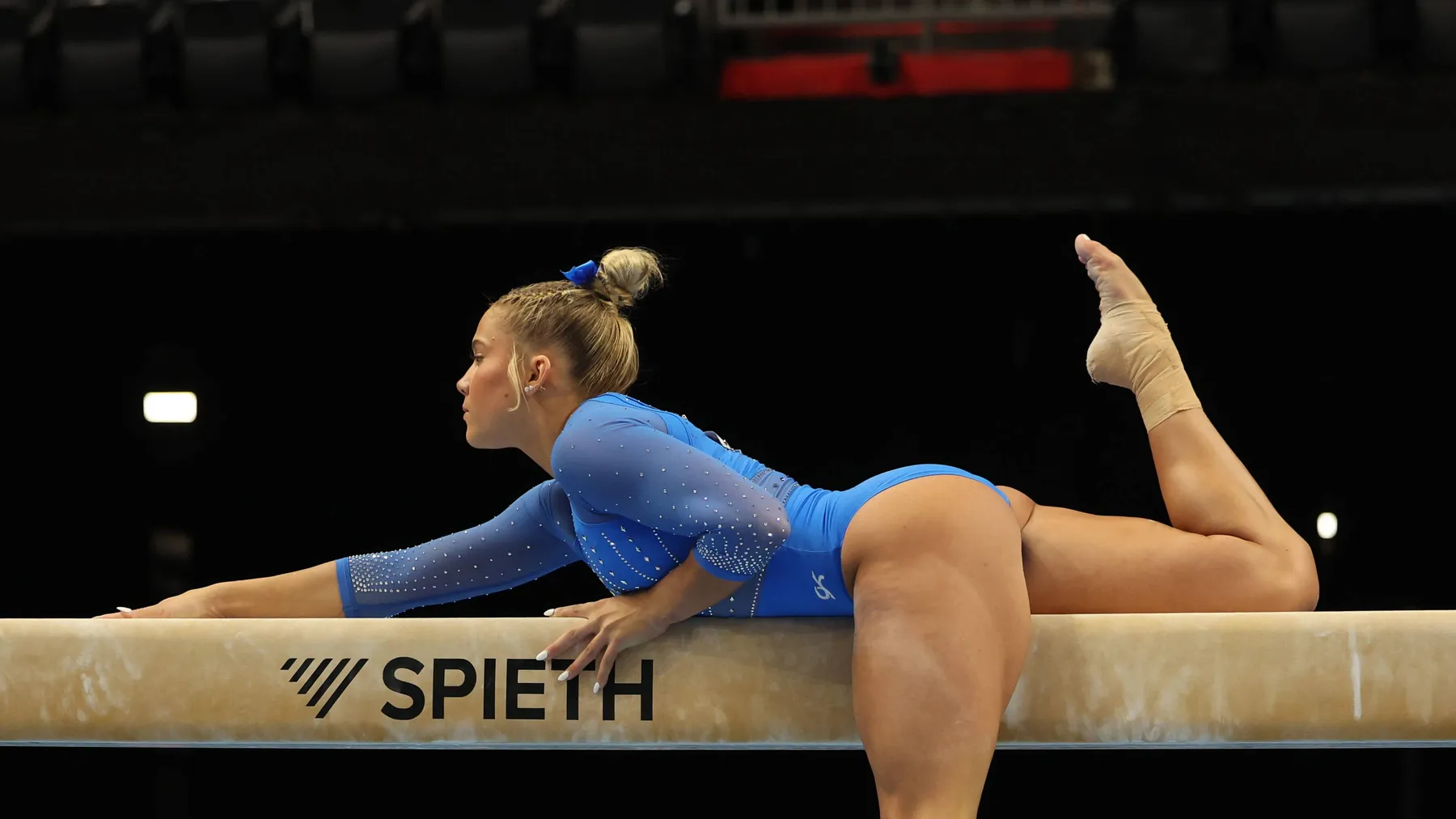 IMAGO / Newscom World
Reese Esponda on balance beam.
The account of the FIG’s communication and the earlier assessment in Jesolo comes from Kiens. We have not seen a written FIG decision on this individual case.
Sources
GymCastic interview with Patrick Kiens · 14 October 2026. Direct quotations at 2:44 and 2:54.
FIG Women’s Artistic Gymnastics Code of Points · section 13.3
Commentary
In doubt, the benefit should go to the gymnast.
By Matthias Wellmer
Reese Esponda is being asked to adjust to a different assessment immediately before a World Championships: change practised movements, secure a new connection and still be ready when it matters. The officials communicate a decision. The gymnast has to make it work with her body.
That must not become the accepted way to deal with these cases. Gymnasts should not bear the cost of contradictory FIG decisions. If an execution passes without objection at an international competition under FIG rules, the athlete and coach must be able to rely on fundamental concerns being raised in good time.
For me, the guiding principle should be the same as in court: in dubio pro reo. Give the benefit of the doubt to the person affected. Applied to scoring, that means accepting the higher value in the gymnast’s favour when the classification remains contradictory or unclear.
I expect that standard from the FIG too. For Esponda, recognition as a forward salto should remain in place for these Worlds unless the contradiction with the earlier assessment is explained clearly. The consequences of that uncertainty must not be passed on to Reese.
Rules can be clarified and mistakes corrected. Those interpreting them must also take responsibility for the consequences: clear criteria, timely guidance and fair transitions. Days before the biggest competition of the season, a gymnast should not have to carry an unresolved judging question.